 NO KYC CASINO
How to Use a Blockchain Explorer to Track Your Casino Transactions
Crypto casinos promise transparency via blockchain. The reality is that transparency without knowing what you're looking at is just noise.
- logged
- by
- Omar Haddad
- rail
- Crypto Gambling
- read
- 3 min
- hash
- 9ffed8f
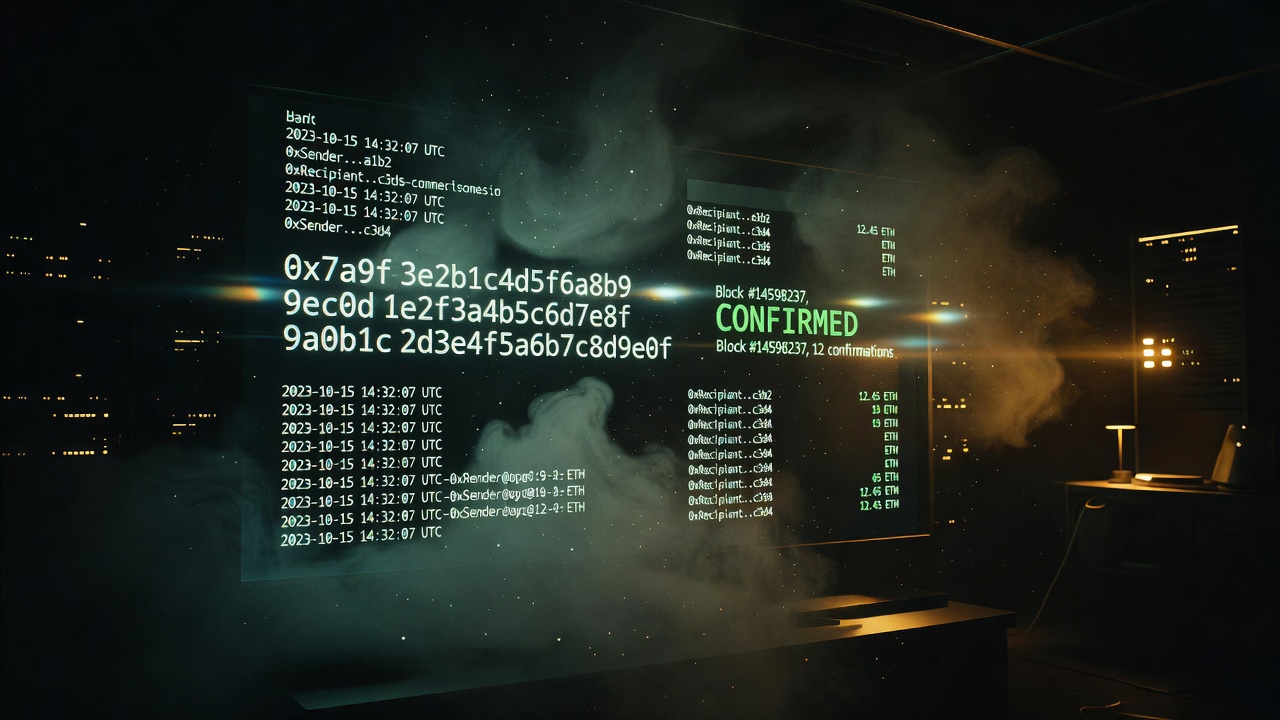
Blockchain explorers let you see all transactions on a blockchain. For crypto casinos, this theoretically allows you to verify that your bets are fair and payouts are honest.
In practice, most players don't know what they're looking at, and even if they did, the information available tells you almost nothing about fairness.
What A Blockchain Explorer Shows
A blockchain explorer shows: wallet addresses, transaction amounts, transaction times, transaction hashes.
For a casino, you might see: players deposit crypto, casino wallet receives it, casino wallet sends payouts, players receive crypto.
All of this is visible and immutable. Once recorded on the blockchain, it cannot be changed.
What This Does NOT Show
A blockchain explorer does not show: the fairness of the games themselves, the randomness of outcomes, whether the house edge is honest, the actual payout rates.
It only shows movement of money. A casino could have 98% RTP or 20% RTP, and the blockchain would look identical from a transaction perspective.
The Transparency Mirage
Crypto casinos market themselves as "provably fair" because you can see the transactions on the blockchain.
This is technically true but misleading. Yes, you can see that money moved. No, you cannot verify that the games are fair from the blockchain alone.
What Provably Fair Actually Means
Provably fair, properly implemented, means: the casino commits to a specific algorithm and parameters before the game. You can verify that the outcome was determined by that algorithm applied to those parameters.
The blockchain can record the commitment and the outcome, but not the fairness of the algorithm itself.
The Wallet Tracking Problem
You can follow a casino's wallet on a blockchain explorer and see their balance changing as players deposit and withdraw.
You cannot see: whether they're commingling player funds with operational funds, how much of their wallet is actually player money vs. house profit, whether they have enough reserves to pay out.
A casino could be insolvent and still appear solvent on the blockchain (if they're receiving more deposits than payouts).
The Information Asymmetry Remains
The casino knows everything: their proprietary algorithms, their actual RTP, their reserve levels, their player database.
You can see transactions but not interpretation. The blockchain is a mirror that shows the surface without revealing what's underneath.
How To Actually Use A Blockchain Explorer
If you're playing at a crypto casino, an explorer is useful for: verifying your deposit was received, verifying your withdrawal was processed, confirming transaction times.
It is not useful for: verifying fairness, confirming RTP, auditing the casino.
The Real Verification
If you want to verify a casino's fairness, you need: independent audit of their RNG, published game results over time, third-party review of their algorithms.
A blockchain explorer cannot provide any of this.
The Marketing Sleight
Crypto casinos call this "transparency" and "provably fair" because blockchain visibility sounds technical and secure. In reality, it's misdirection.
Yes, your transaction is immutable. No, that doesn't tell you if the game is fair.
The Practical Value
The blockchain explorer's real value is as a record. If a casino ever disputes a payout, the blockchain provides immutable evidence of what actually happened.
Beyond that, it's theater. You can look, but you won't see what matters.
What To Look For
Instead of trusting blockchain transparency, look for: casino licensing by a reputable regulator, third-party audit of their RTP and games, published terms that specify their edge, a clear payout policy.
These matter. Blockchain exploration doesn't.
The Bottom Line
A blockchain explorer shows you the plumbing of transactions. It's useful for audit trails but not for fairness verification. The fact that crypto casinos market it as fairness proof reveals their marketing sophistication more than it reveals actual fairness.