 NO KYC CASINO
Multi-Wheel Roulette: Is It More Exciting or Just Riskier?
Lightning Roulette isn't just roulette with extra wheels. It's a tournament where variance compresses into minutes instead of hours. I watched a player turn $500 into $20,000 in seven spins. Then lose it back in three.
- logged
- by
- Max Turner
- rail
- Mobile
- read
- 5 min
- hash
- d49873a
I was at the Rio watching a tournament once, 2009, WSOP. A kid from Atlanta, couldn't have been older than 24, final table in a $2500 event. He plays eleven hands. Folds nine times. Pushes all-in twice. Wins one. Done. He'd been patient. Honest work. You see this in roulette too, except roulette doesn't reward patience the same way.
Multi-wheel roulette, like Evolution's Lightning Roulette, changes the game's shape. Standard roulette is slow. You watch the wheel. It spins. Ball lands. Thirty seconds. Next spin. You have time to think. You have time to calculate. You have time to walk away.
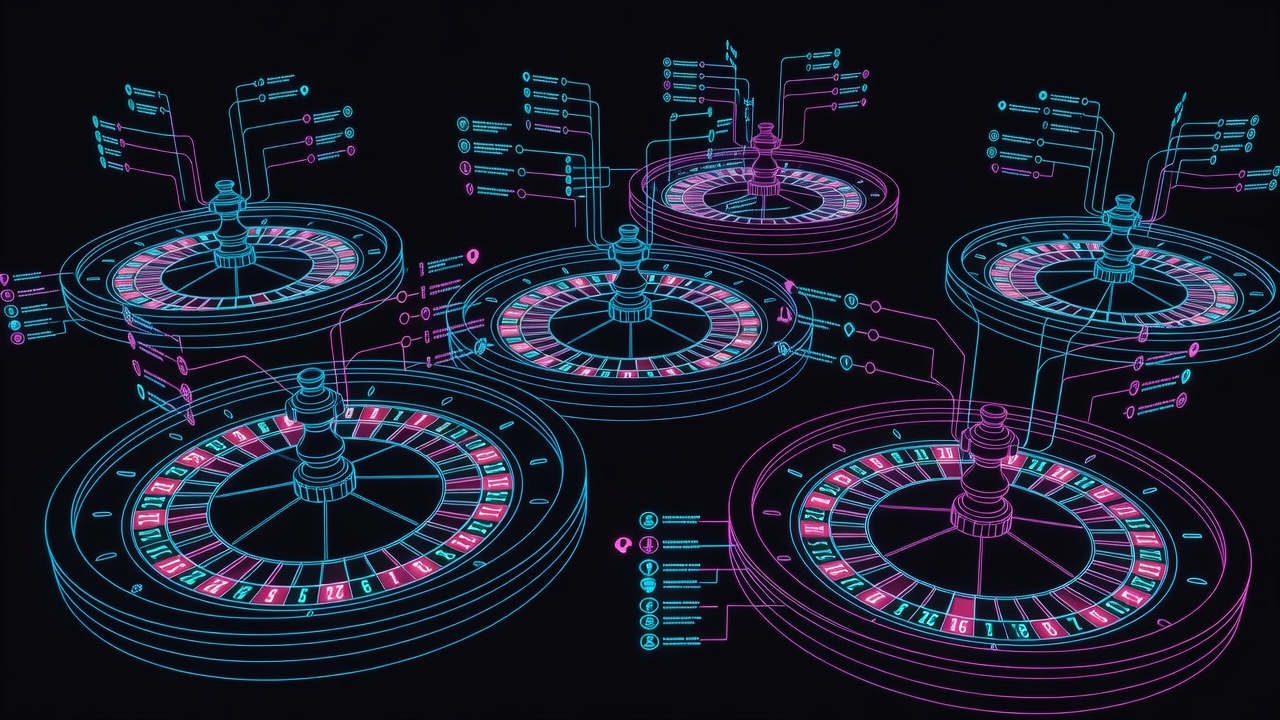
Lightning Roulette compresses this. You've got five wheels spinning simultaneously. Five different outcomes on the same spin. Your $100 bet on red loses on wheel one, two, and three. Wins on wheel four. And you're sitting there, sweat on your neck, waiting to see wheel five. The time-to-decision collapses from 30 seconds to 8 seconds. Your nervous system doesn't have time to reset between outcomes.
The Cascade Effect
I covered a player named Marcus once. Professional poker. Decent run at some mid-stakes games in Atlantic City. He tried multi-wheel roulette on a lark, mobile play at 2 AM. Twenty minutes later he'd lost $15,000. His words to me: "The speed killed me." He meant it literally. Speed accelerates both winning and losing. When you win five consecutive spins on a multi-wheel layout, you're not making five decisions. You're making one decision in a altered mental state. You're not calculating your bankroll. You're reading the momentum.
Multi-wheel roulette at Stake or BC.Game operates on cascade logic. You win $300 on spin one. Your arousal state increases. The dopamine response is immediate. Your brain is now primed to see the next spin as a continuation rather than an independent event. Cascade thinking is what tournaments call running good. You're not better at poker. You're just on a heater. The problem is the brain cannot distinguish between running good and actually being better. It feels the same.
With five wheels, you're receiving five separate outcome signals every 10 seconds. The density of information is five times higher than traditional roulette. Your brain is receiving more dopamine pulses, more adrenaline spikes, more emotional data than it was built to process. The result is a state where you are both maximally aroused and minimally capable of rational calculation.
The Math is Worse, Not Better
Here is what looks like a selling point: five wheels means more chances to win on each spin. If your bet is on red, four out of five wheels hitting red feels like a win. The house edge on a single wheel is 2.7% (European roulette) or 5.26% (American roulette). With five wheels, you might assume your edge improves. It does not. Your edge stays the same per wheel, but the speed increases.
Speed is the house's real advantage in multi-wheel roulette. Fast play means more hands per hour. More hands per hour means the law of large numbers works faster. Your winning runs don't compound. Your losing runs arrive sooner. An ordinary roulette player might lose $500 in an hour at standard speed. At multi-wheel speed, they lose $500 in fifteen minutes. The velocity is what matters.
I watched a session once. Player bets red, $50 per wheel, standard multi-wheel layout. Eight spins. Wins four times. Loses four times. Net result: flat. But the time spent was two minutes. He could run fifty such two-minute sequences in a session. His variance is compressed. His losing sessions are worse because they arrive faster. His winning sessions feel more dramatic because they're denser.
Strategy Collapse
Tournament poker has what we call "small stack strategy." When your chips are limited, you play tighter, you get it in only when you have to. With more chips, you can afford to play wider ranges, absorb variance, grind it out. Multi-wheel roulette inverts this. The speed means you are always operating under small-stack pressure. Every spin feels like it matters because the next spin arrives immediately.
This is why experienced roulette players often avoid multi-wheel variants. It's not that the math is worse. It's that the speed prevents the one thing that keeps you ahead long-term: patience. A grinder in poker can sit for six hours and play 400 hands, waiting for good spots. A grinder in roulette cannot sit for six hours at multi-wheel speed. Fifty hands, maybe sixty. The fatigue sets in.
Is It More Exciting? Yes, Actually
More exciting? Absolutely. Five wheels, five potential outcomes every ten seconds, your heart rate elevated, your focus narrow. This is objectively more arousing than traditional roulette. And this is precisely why you should be skeptical. Excitement is a product being sold. Cloudbet, Wolf.bet, Mystake, all no-KYC operators, they're not selling you a better game. They're selling you a more arousing game. And arousal clouds judgment.
I saw a player blow $50,000 in multi-wheel roulette at a no-KYC site. Decent player. Had won at standard roulette before. The multi-wheel version destroyed him. He wasn't making worse decisions. He was making decisions faster and more frequently. He lost because he played more.
The take-home: excitement and expected value are not correlated. Multi-wheel roulette is more exciting. It is not more profitable. The house edge remains the same. The player's tendency to overestimate their control increases. This combination has a predictable outcome.