 NO KYC CASINO
Why Screen Size Matters for Mobile Blackjack
Mobile blackjack on a phone plays differently than on a tablet. The screen size changes your decision-making speed and your accuracy.
- logged
- by
- Max Turner
- rail
- Mobile
- read
- 3 min
- hash
- 4bb8437
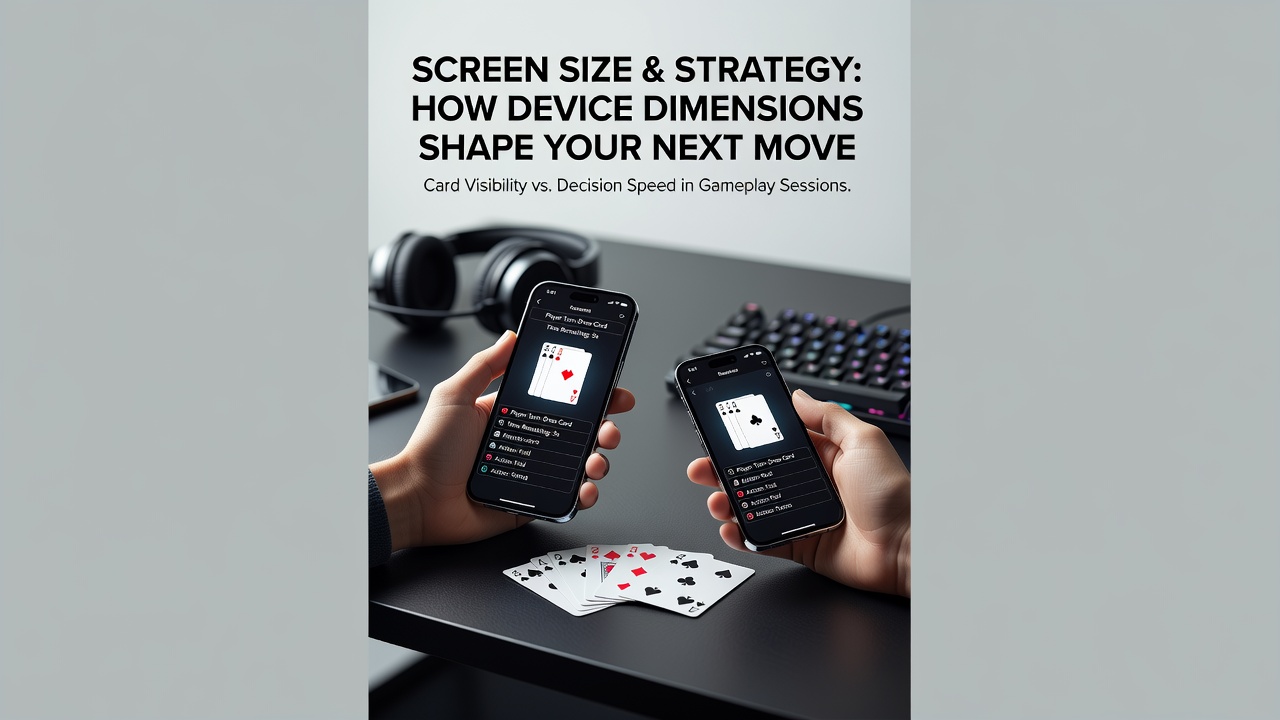
I've been playing mobile blackjack for eight years. Started on a 5.5-inch phone. Recently switched to a 6.7-inch phone. The game feels different.
It's not the game. It's the interface. Screen size matters more than people realize.
The Visible Information Problem
On a small phone screen, you can see: your hand, one dealer card, basic action buttons (hit, stand, double, split).
You cannot easily see: your bankroll, your bet amount, your session total, your basic strategy chart if you're using one.
On a tablet, all of this is visible simultaneously.
This matters because decisions are faster and more accurate with more information visible.
The Tap Accuracy Problem
On a small phone, the buttons are close together. Hit button is next to stand button. Easy to tap the wrong one in a hurry.
On a larger phone or tablet, the buttons are more spread out. Lower chance of misclick.
A single misclick costs money (you hit when you meant to stand, for instance).
The Decision Speed Tradeoff
Small screens force faster decisions because you can't see enough information. You have to make a call with partial information.
Large screens let you process more information. You might make better decisions, but you might also second-guess yourself more.
The Session Length Effect
Small screen = faster play = more hands per hour = more losses per hour. Large screen = slower play = fewer hands per hour = fewer losses per hour.
For someone trying to minimize losses, larger screens are beneficial. For a casino trying to maximize extraction, smaller screens are beneficial.
The Game Design
Game developers know this. Mobile blackjack games are optimized for the most common phone sizes (5-6 inches). Tablets are afterthoughts.
This means the UI is cramped on phones and spacious on tablets. If you're serious about blackjack, play on a tablet if available.
The Bankroll Visibility
On a small screen, your bankroll is often in a small corner. You're not watching it closely. You lose track of how much you've wagered.
On a larger screen, you can have it in a prominent position. You're more aware of the money moving.
The Distraction Factor
Small screens are portable. You play while distracted (at work, commuting, waiting). Distractions lead to worse decisions.
Tablets are less portable. When you play on a tablet, you're usually sitting down, focused.
The Physical Ergonomics
Small phones require frequent hand movements. You're reaching to tap buttons, your hand position changes, you're cramped.
Tablets let you hold them more comfortably. Your hand position is stable.
This seems minor but it affects decision-making speed and accuracy.
The Optimal Setup
For mobile blackjack, if you're trying to play well: tablet, visible bankroll, basic strategy chart accessible, slower play, conscious decision-making.
If you're trying to play for fun and don't mind losing, phone works fine. The trade-off is accuracy for portability.
The Game Providers
Evolution and other live dealers design their interfaces assuming 5-6 inch screens. Tap a button, see the action, the animation plays.
On a tablet, the buttons are smaller, less optimized. The experience is not as refined.
The Choice
Screen size is not neutral. It changes your experience, your decision-making speed, your losses per hour, your engagement.
Choose based on what you want from the game: portability (phone) or accuracy (tablet).