 NO KYC CASINO
AI and Machine Learning in Sports Betting Models
Someone at a poker table in 2015 told me about a guy running machine learning models on NBA play-by-play data.
- logged
- by
- Felix Braun
- rail
- Sports Betting
- read
- 4 min
- hash
- b57691b
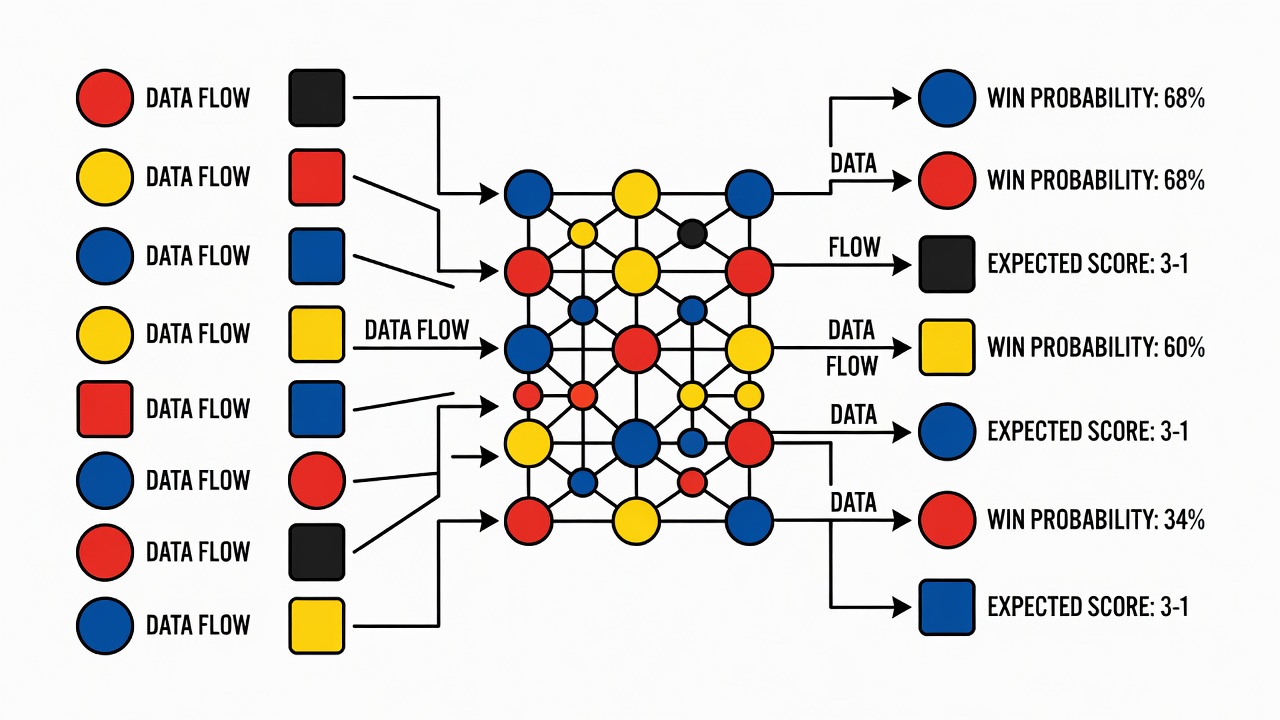
Someone at a poker table in 2015 told me about a guy running machine learning models on NBA play-by-play data. The guy had written algorithms that could predict the outcome of a quarter with sixty-two percent accuracy. Sixty-two percent is not transformative in a world where Vegas pays out at forty-eight percent (after the vig). But it was enough. If you know the outcome sixty-two percent of the time, you can bet accordingly and still be slightly profitable over volume. The thing nobody says out loud is that machine learning has not really changed sports betting. Machine learning has just made the existing inequalities more efficient.
Here is what machine learning does in sports betting. It finds patterns in historical data that humans cannot perceive. A model can ingest ten years of NBA data and identify subtle correlations. The back-to-back games played three time zones away on a Wednesday. The specific combinations of defensive scheme plus fatigue plus line movement that precede a cover. Humans see randomness. Machines see signal in the noise.
The Reality of the Models
The problem is that sports outcomes are not stationary. The league changes. Teams change. Rule changes alter the nature of competition. A model trained on 2005 through 2015 NBA data becomes less predictive on 2020 data because the three-point line changed, spacing changed, the pace of play changed. The model is essentially fitting to a past that no longer exists. This is called overfitting. The algorithm becomes very good at explaining historical data and useless for predicting new data.
Professional sports bettors who use machine learning spend more time maintaining models than training them. The model requires constant retraining. New data flows in. The model must be updated weekly, sometimes daily. A model that was accurate at the start of the season becomes less accurate by mid-season as the true strength of teams becomes clearer and team composition changes due to trades and injuries.
The Arms Race
What machine learning really does is accelerate the arms race. Vegas knows that smart bettors are using machine learning. So Vegas starts to incorporate machine learning into their own line-setting. Vegas now sets lines that exploit known algorithmic biases. If every machine learning model overweights recent performance, Vegas sets lines that punish overweighting recent performance. The market becomes an competition between algorithms rather than between humans and algorithms.
The edge decays quickly. A bettor discovers a correlation that generates sixty percent accuracy. They exploit it for three months. Other bettors discover the same correlation. The market adjusts. The correlation weakens. The accuracy drops to fifty-two percent. The bettor must then find a new correlation. This treadmill never stops.
The Real Usage Pattern
Most sportsbooks use machine learning not to beat other bettors but to manage risk. A sportsbook does not want to predict the correct outcome. It wants to balance bets so that money flows equally to both sides of the line. Machine learning helps the book understand when a line is out of equilibrium. A machine learning model tells the Vegas operator when too much money is coming in on one side. The operator can adjust the line to attract balancing action.
Retail bettors use machine learning to feel smarter. They run a model. The model gives them a percentage chance that their bet wins. They feel like they have an edge. Usually they do not. The model is a formalization of existing information, not a source of new information. If the model is based on publicly available data (team records, injury reports, line movement), then the accuracy is already reflected in the Vegas line. You are not beating the market. You are discovering what the market already knows.
The future of sports betting AI looks like increasing sophistication in data collection. Real-time biometric data from players. Advanced camera tracking of team spacing and movement. The models will become more precise. But the efficiency of markets will increase correspondingly. The smart money will continue to earn small edges. The recreational money will continue to lose. Machine learning will just make the losing slightly more efficient.