 NO KYC CASINO
Continuation Bets in Online Poker: What They Actually Mean
The marketing around c-bets sounds like you're doing something clever. You're not. You're following a map that everyone has.
- logged
- by
- Felix Braun
- rail
- Guides
- read
- 4 min
- hash
- 618ba2a
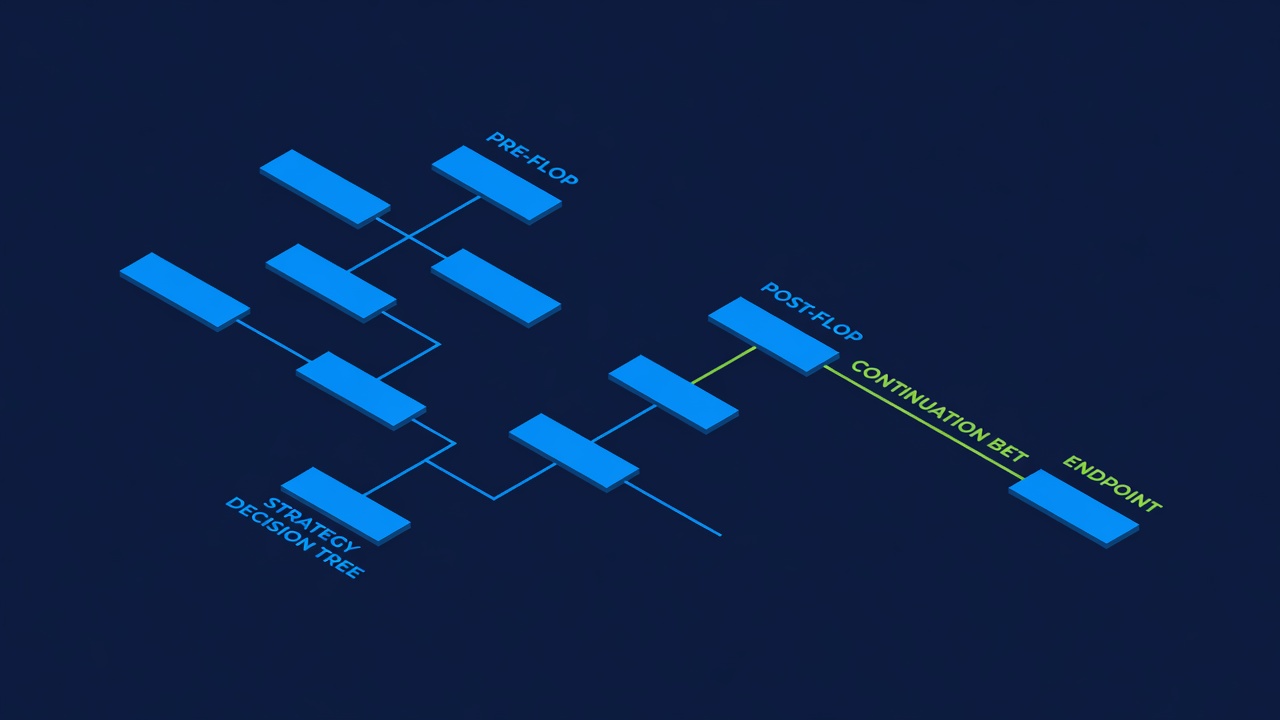
Let me translate what online poker sites say about "continuation betting" versus what it actually is.
The marketing language: "A continuation bet is an aggressive move that leverages your positional advantage to maintain momentum." What that means: You raised before the flop. The flop came. You bet again. Now everyone thinks you have a hand.
Here's the weasel-word check. "Leverages" = you're bullying. "Maintains momentum" = you're lying because the flop might have missed you completely. "Aggressive move" = bluff. The whole phrase is telling you to bet into weakness and hope nobody calls. That's it.
Online poker markets this as a tactical weapon, something separating the sharks from the minnows. Every single guide says "the c-bet is your bread and butter." That's true, but not for the reason they're selling.
The Real Mechanics
In tournament poker and cash games online, a continuation bet works because most of the time, most of the flops miss most of the hands. You're playing poker where nearly 80% of the hands you raise with preflop get air-gapped post-flop. The flop comes, it's rags, and your opponent has nothing either. If you bet, they fold. The hand ends. You win the chips that were already in the pot.
But here's what the marketing never explains: it only works if everyone believes you. The moment players at your table understand that you're c-betting with your entire range (every hand you raised with, regardless of whether it connects to the board), the move stops working. They start calling with air themselves. Now you're betting 100 chips into a pot of 150 with nothing, they call with 7-2 offsuit, and now the hand gets complicated.
Online poker sites want to sell you the idea that "c-betting" is a skill move. It's not. It's a mechanical consequence of hand distribution. You happen to make more money betting here than checking because of math, not because you're outsmarting anyone. An algorithm could do it. An expert player and a decent bot look the same on this particular street.
So what does the casino marketing actually want you to believe? That you're learning "advanced strategy." That there's a secret layer to online poker only the winners know. That a continuation bet is different from a random bet. It's not. It's a bet. Sometimes it works, sometimes it doesn't. The reason it "works" statistically isn't because you've done something clever. It's because everyone's sitting in a chair without cards and hope lives forever.
The honest translation would be: "Most players miss most flops. You raised before the flop. Bet now anyway. They'll fold most of the time." Three sentences. Actual information. But that doesn't sound like strategy, does it?
The online poker guides add in all this language about "positional advantage" and "reading your opponent" to make it feel technical. And sure, position matters. The person acting last has more information. But a continuation bet isn't the special thing that makes that true. It's just a bet that happens to land in a spot where most hands lose.
Here's the bigger translation: every guide on c-bets is training you to play formulaic poker. Bet the flop. Bet the turn if you hit or if you think they folded. Bet the river. It's a script. You're not reading the table. You're following a path printed in the guidebook. The casino sites frame this as "efficient strategy" when it's really just "here's the robot program." They can't say that because then you'd realize you're playing against computers running the same script you are.
The truth about continuation bets? You're exploiting a quirk of probability, not displaying genius. The moment the table adjusts, the move becomes neutral, then bad. That's why every poker site keeps releasing new guides: the old moves stop working. Players adapt. The marketing team needs fresh material to sell the idea that there's always another secret layer. There isn't. There's just betting when you think you'll win, folding when you think you'll lose. The continuation bet is good only until it isn't.