 NO KYC CASINO
Fake Casino Apps: How to Avoid Downloading Malware
A casino is a building engineered to move people. Every door opens on a sight line that extends seventeen feet deeper into the floor.
- logged
- by
- Felix Braun
- rail
- Guides
- read
- 5 min
- hash
- 4885fbe
A casino is a building engineered to move people. Every door opens on a sight line that extends seventeen feet deeper into the floor. Every carpet is designed to obscure the passing of time. The light levels are set precisely to keep the human eye from settling on any fixed point for more than a few seconds. Everything is architecture. Everything is traffic.
A fake casino app operates on the same principle, except the geometry is digital and the stakes are your credentials and whatever money lives in your account.
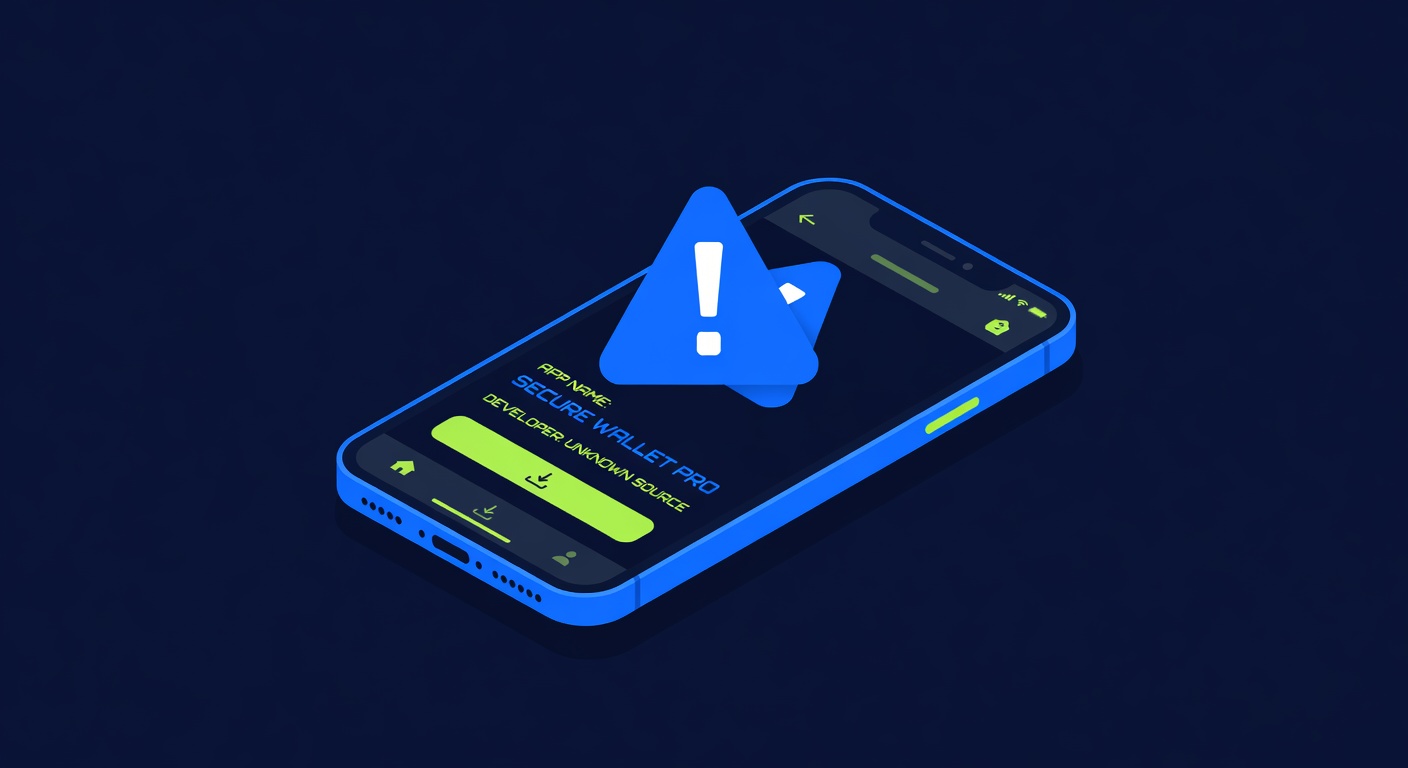
The mechanics are simple. A attacker designs a counterfeit installation that mirrors the interface of a real casino platform: DraftKings, Bet365, Golden Nugget, whatever holds market share in your region. The app looks correct. The colors are right. The typography matches. Then they distribute it through channels where real apps don't exist, or they infiltrate legitimate distribution channels and replace real apps with poisoned versions. A user installs what they think is their trusted casino. The app either harvests their username and password as they log in, or it runs malware in the background that drains accounts, locks files, or exfiltrates payment information stored on the phone.
The architecture of trust in mobile app distribution is fragile. On Android, anyone can run an app store. On iOS, Apple controls the distribution, but counterfeit apps still slip through. And if a user doesn't understand the difference between an official store and a third-party marketplace, they are immediately vulnerable.
How to Identify a Real App
The primary risk vector is downloading from a source other than the official app store. If you are obtaining your casino app from Reddit, from a text message link, from Google search results, or from a website that claims to offer a "download," you are accepting substantial risk. The official apps are free. The official apps exist in the official stores. There is no shortcut and no alternative that improves security.
On iOS, the official app store is Apple's App Store. The developer name on the listing is the casino's parent company. BGO Entertainment owns bingo apps. SoftSwiss develops games for dozens of licensed operators. If the developer name is "Mobile Apps LLC" or "Digital Gaming Solutions" or some other generic corporate placeholder, you have not found an official app.
On Android, the official store is Google Play. But Android also allows sideloading: installation of apps from sources other than Play. This is convenient for developers and users, and it is also the vector through which most fake casino apps enter phones. A user receives a link in an email or a text saying "Download our mobile app here," clicks it, and installs something that is not what they think it is.
The name alone is insufficient. Real apps: DraftKings, Bet365, PokerStars, Stake, Rollbit. Fake apps: DraftKingz, Bet-365, PokerStarz, Stake.me, Rollbit.io. The counterfeit versions rely on confusion. They are similar enough to find in a search or to read quickly on a small screen. They differ enough in the fine print to avoid certain trademark challenges.
The official casino maintains a specific developer identity across all platforms. You can verify this by checking the casino's official website. The real DraftKings website links to DraftKings on Google Play and DraftKings on the App Store. Follow that link. Do not search for the app yourself and assume the first result is correct. Search results are sponsored. Links in emails are often phishing. The only safe vector is: casino website, then official app store, then download.
What Malware Does and How It Persists
Once installed, a fake casino app operates in one of several modes. The simplest attacks a credential stealer. The app presents the correct login screen, captures the username and password as the user types, and transmits it to an attacker-controlled server. The user sees the legitimate app open behind the scenes, confirming they have entered their credentials correctly, and the attacker then uses those credentials to drain the account.
More aggressive attacks install background processes that monitor all activity on the phone. Banking apps, email, messaging, browsers. If the user logs into their actual casino account through a browser rather than the app, the malware captures that session. If they check their email, the malware reads it. The goal is full access to the device, and casino login credentials are only the beginning.
Some fake apps are also ransomware. They encrypt the phone's file system and demand payment. Some are cryptominers. They use the phone's processor to mine cryptocurrency in the background, draining the battery and generating heat until the phone is too warm to use. Some contain adware. They display unauthorized advertisements over everything the user tries to do, making the device unusable.
The persistence challenge is that once malware is installed, it is often designed to prevent uninstallation. It may hide from the app drawer. It may run as a system-level process that continues even if the user thinks they have deleted it. On older Android phones with inadequate security updates, it can integrate itself into the firmware.
The defense is not to let it install in the first place.
Verification at the Technical Level
For the cautious user, several verification steps exist. On iOS, check the developer's name and look at the app's permissions. Real casino apps ask for camera access (for identity verification), microphone (for customer support), and location (for geolocation and responsible gambling). They do not ask for access to your contacts, your health data, or your photo library.
On Android, examine the permissions in the app's information page on Google Play. Scroll through the reviews, but be aware that fake apps also solicit five-star reviews. Look at the number of installs: real casino apps have millions. A casino app with two thousand installs is likely fraudulent. Check the last update date. Real apps update regularly, often monthly. An app that has not been updated in a year is suspect.
If you are downloading from Google Play itself, the risk is lower but not zero. Google's automated scanning catches some malware, but not all. The best defense is the principle itself: do not download apps from third-party sources. Ever. The casino's official website will direct you to the official store. That is the only trust anchor.
A casino is a system designed to influence behavior. A fake casino app is a system designed to extract information and money. The differences in architecture matter more than the similarities in appearance.