 NO KYC CASINO
How Stablecoin Betting Is Changing Online Sportsbooks
Stablecoins have turned the online sportsbook into something more fluid, and arguably more interesting, than the credit card era ever managed. Seven ways the pegged dollar has quietly rewritten the action, told from several steps behind the velvet rope.
- logged
- by
- Felix Braun
- rail
- Crypto Gambling
- read
- 5 min
- hash
- 1a0a908
There used to be a pianist at the Desert Inn who remembered everybody.
He is gone now, of course, along with the Desert Inn, along with the kind of Sunday afternoon that produced a casual ten thousand dollar bet on a meaningless Steelers game because a certain shipping magnate was in a certain booth and wanted to feel something. That world is not coming back. What has replaced it, at least on the betting side, is a different kind of fluency, one I have watched emerge over the past five years with the mixed fascination of a man who remembers when a wire transfer took a week and nobody thought to complain.
Stablecoins, for those who have been wintering somewhere pleasant and uninformed, are cryptocurrencies pegged one to one with a fiat currency, typically the US dollar. Tether issued the first meaningful one in 2014. USDC followed in 2018. A handful of others orbit the same sun. They now move more daily volume, collectively, than the domestic payments networks of several midsized countries. A serious gambler in Dubai or Warsaw or Buenos Aires can fund a sportsbook account in forty seconds with a coin that holds its value, and two years ago that was not quite true. It is very true now.
Here are seven ways the sportsbook has changed because of it.
1. Cross-Border Liquidity That Actually Moves
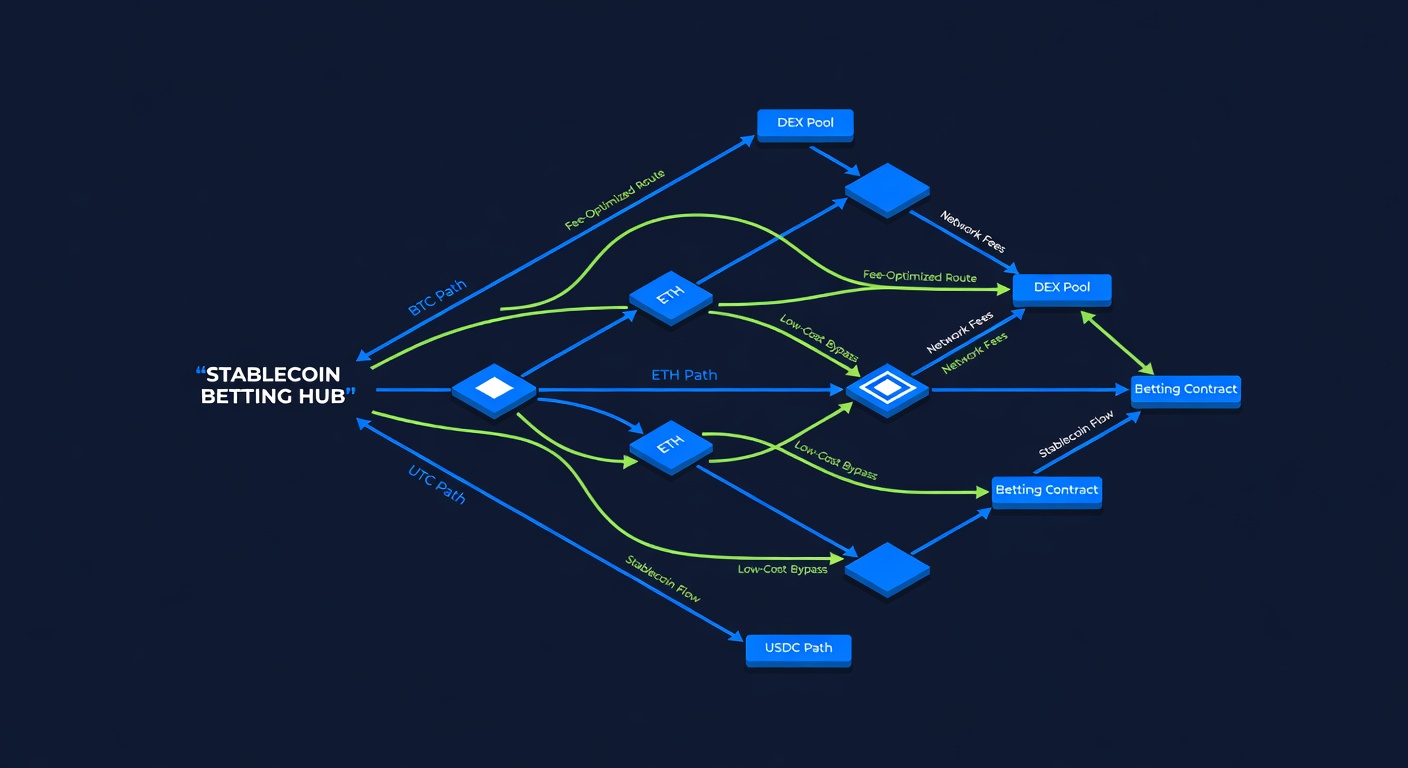
The old problem was not that a Polish bettor wanted to play on a Curacao book. The old problem was that moving zlotys to Curacao required a bank sympathetic to the route, which no bank ever was. Stablecoins sidestep the route entirely. A single Ethereum or Tron transaction carries the bettor's dollars over whatever ocean the ocean happens to be. The book receives the funds in a currency it can price against and pay back in.
The effect is that the global pool of sportsbook liquidity has thickened in a way no pre-2020 market structure allowed. Lines move faster. Sharp money hits earlier. A closing line on a Tuesday Premier League match now reflects a wider range of opinion than it did when most of that opinion was stuck behind an SEPA transfer.
2. Withdrawal Times That Are Now a Feature
For years, the quickest online sportsbook withdrawal in the regulated US market took three business days. It was pitched as a feature. One email arrived on Friday. The funds were in your account by Wednesday. You made peace with it because the alternative was worse.
A stablecoin withdrawal clears in minutes. On certain networks, seconds. The shift is not cosmetic. The time value of money on winnings matters, and it matters more to a professional bettor than to a tourist. Sharp accounts that once kept five or six books open to manage float can now keep two and move funds between them like currency traders.
3. A New Kind of Bet Sizing
It has become quietly fashionable, in the sort of circles that still use the word fashionable without embarrassment, to express stakes in round-coin units. Ten thousand USDT. Twenty-five thousand USDC. The rounding is psychological. The older convention of betting in fiat with precise dollar figures is giving way, at the top of the market, to a more architectural sizing that resembles crypto trading desk behavior more than casino behavior.
Whether this is progress or affectation is a question one can enjoy without answering.
4. A Retirement Of The Chargeback
Credit card chargebacks were always the most American thing about online sportsbooks. A bettor would lose, dispute the charge with Visa, recoup his losses, and leave the book to argue with a processor in Atlanta for six months. The books priced this into their margin and dealt with it.
Stablecoin transactions are final in the way a check cleared at the cashier's cage used to be final. Once it is on chain it is on chain. Which has the salutary effect of making the relationship between bettor and book cleaner. No recourse, no complaints about late fees, no processor sending awkward letters. You won, you lost, you moved on. The old Strip would have approved.
5. Anonymity, Handled Better Than One Might Expect
It is a mistake to think that stablecoin-funded sportsbooks are all wild west affairs where no one knows who anyone is. Most reputable operators in this space run KYC on withdrawals above a certain threshold and have tightened their processes considerably since 2022. What has changed is the texture of identity. The player is not anonymous to the state, if the state cares to look, but he is operating at a level of friction closer to cash than to a bank transfer. For certain kinds of sophisticated bettor, this is less about hiding and more about speed.
6. The Return Of The Private Book
The private bookmaker, a fixture of American life from before the Korean War until roughly the late 1990s, has made a quiet comeback via stablecoin rails. A man in Long Beach runs a small book on a Telegram channel for perhaps two dozen bettors, settles weekly in USDC, and has reproduced most of the economic function of an illegal local book with none of the logistical hassle. This is a niche phenomenon but a striking one. The pipes have recreated the institution.
7. A Different Relationship With The Sportsbook As Product
Perhaps the most consequential shift is the hardest to quantify. The domestic, regulated sportsbooks of the American market have spent a decade training their customers to think of the book as a lifestyle product, a place to deposit two hundred dollars on a Thursday for a fun Sunday. The stablecoin bettor, by contrast, tends to treat the book as a utility. He funds, he bets, he withdraws, and the platform's branding is beneath his notice. The companies in Curacao and Costa Rica that have built their sportsbooks around this user have a very different aesthetic sensibility than DraftKings. Spare, technical, clean lines. The product is the odds.
Which feels almost like the original form of the thing, come back around. The pianist at the Desert Inn would not recognize the rails. He would recognize the customer: someone who has come to bet, not to be entertained, and who expects the house to keep up.