 NO KYC CASINO
Online Poker Regulation Around the World: A Regional Overview
The history of online poker regulation is a history of sudden shifts. In 2006, the Unlawful Internet Gambling Enforcement Act (UIGEA) passed in the United…
- logged
- by
- Omar Haddad
- rail
- Poker
- read
- 6 min
- hash
- c2f6c08
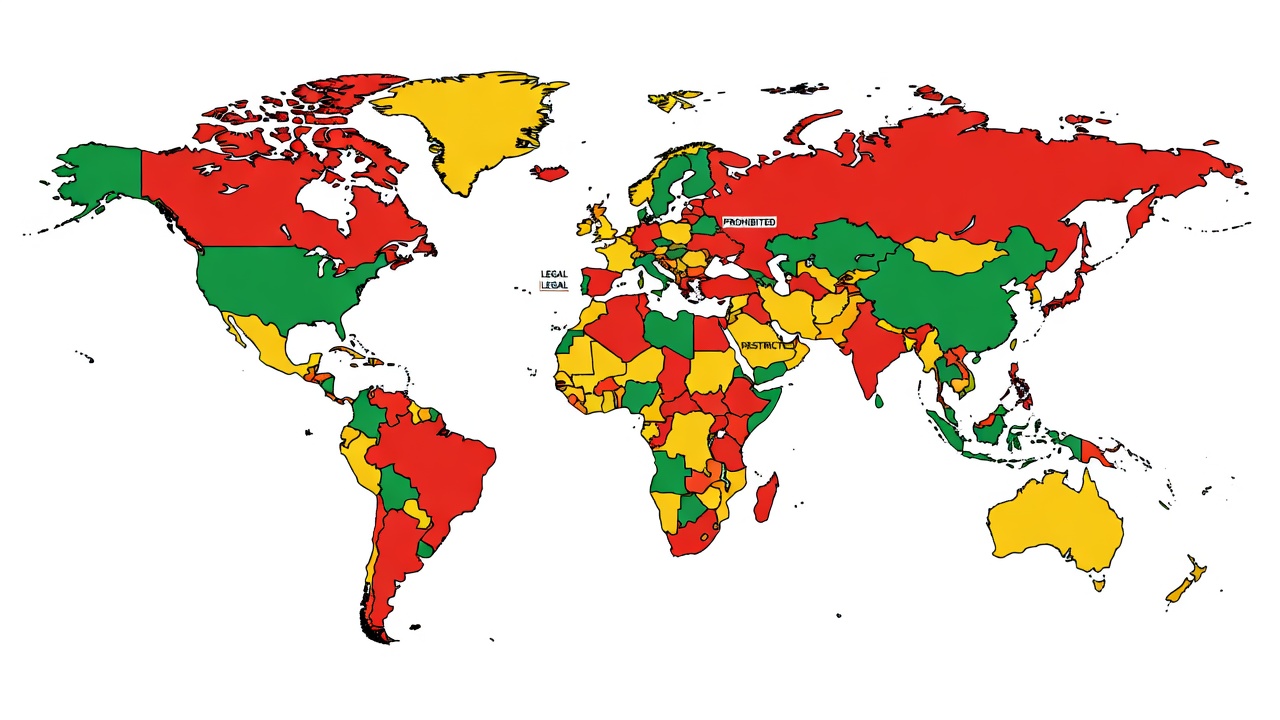
The history of online poker regulation is a history of sudden shifts. In 2006, the Unlawful Internet Gambling Enforcement Act (UIGEA) passed in the United States Congress as a rider to the Safe Ports Act. It did not ban online poker; it banned payment processing for online gambling. Within days, PokerStars, Full Tilt Poker, and PartyPoker pulled out of the US market. Fifty thousand active players found themselves unable to access their accounts. The date was September 30, 2006. It is known in poker circles simply as "Black Friday." Actually, Black Friday happened in 2011, when the Department of Justice seized the major poker sites and charged their operators with wire fraud and money laundering. But September 2006 is Black Friday if you lived through it.
The UIGEA was aimed at sports betting and online casinos, not poker specifically. The law's authors believed (reasonably) that poker was gambling, and gambling was something the federal government could restrict. But the mechanism of the law was payment processing, not poker itself. US residents could still play poker online; they just could not deposit money through US banks or credit cards. This created a market inefficiency: players could not fund their accounts, but operators could not take their money. A brief market correction followed, and the market adjusted. Offshore sites (largely unregulated) accepted US players. Today, sites like GGPoker and Ignition operate in grey legal territory, accepting US players despite the law being ambiguous on whether they are permitted to do so.
Europe took a different path. The United Kingdom legalized and regulated online poker in 2005, through the Gambling Act of 2005. The law created a licensing framework and the UK Gambling Commission was established to grant licenses and oversee operators. The license was not cheap (initial application costs around 200,000 GBP), but it granted operators legitimacy and regulated player protections. This meant a serious, licensed poker operator had to maintain player funds separately, undergo audit, submit to responsible gambling standards, and comply with anti-money-laundering requirements. The consequence: operators in the UK are generally more trustworthy than operators in jurisdictions with no regulation.
Malta followed a similar model, establishing the Malta Gaming Authority (MGA) in 2002. Malta became a hub for European online gambling operators, partly because the regulatory framework was clear and partly because Malta's tax structure was favorable. Operators like PokerStars and Bet365 took licenses in Malta to serve European and Asian markets. The MGA publishes test results for RNG (random number generators) and maintains audit trails. Malta is not as strict as the UK (licensing costs are lower, enforcement is lighter), but it is substantially more regulated than the Curacao model.
Asia and the Offshore Model
Curacao (a Caribbean island, Dutch territory) established a gaming license framework in the 1990s that was deliberately light-touch. The license was cheap (less than 50,000 USD initially), there was minimal ongoing oversight, and it was available to anyone. Thousands of online casinos and poker sites took Curacao licenses. The advantage: low cost, fast licensing, minimal regulation. The disadvantage: no guarantee of fair play, no separation of player funds, no recourse if an operator disappeared with player money. Curacao licenses became synonymous with "offshore and potentially sketchy."
Asian countries took various approaches. The Philippines licensed online gambling in 2016, creating the Philippine Amusement and Gaming Corporation (PAGCOR) regulatory framework. Operators licensed in the Philippines serve Asian markets. The Philippines model is lighter than the UK but heavier than Curacao. China does not permit any online gambling and actively blocks access. Singapore permits limited online gambling through licensed operators. The regulatory landscape in Asia is fragmented, with each country deciding independently whether to permit, regulate, or ban online poker.
Canada is regionally regulated. Each province (British Columbia, Ontario, Quebec) maintains its own gaming commission. Some provinces (like British Columbia) have taken a "shared liquidity" approach, where online poker pools are shared across provinces to improve game quality. The federal government does not ban online poker; it simply does not license it. This creates a grey market where licensed brick-and-mortar casinos operate online poker rooms, while unlicensed operators exist in a legal grey zone.
The Recent Wave: Legalization and Strict Regulation
Since 2010, several US states have legalized online poker. Nevada (2013), New Jersey (2013), Delaware (2013), and Pennsylvania (2019) all established regulatory frameworks that permit licensed online poker operations. Each state requires operators to be licensed in that state, to maintain separate player funds, to undergo security audits, and to contribute a percentage of revenue to state gaming enforcement. The consequence: players in these states have significant protections. If a licensed operator goes bankrupt, the state insurance fund covers player balances. If an operator cheats, the state gaming commission investigates and can revoke the license.
The US state model is expensive for operators. A license in New Jersey costs several million dollars. But it grants legitimacy. Players in New Jersey know that PokerStars, DraftKings, or BetMGM is backed by a gaming license and that their money is protected. The trade-off is that the operator pays higher taxes and has more compliance costs, which are passed to players through slightly tighter games and lower liquidity.
Regulatory Patterns
A clear pattern emerges across jurisdictions: strict regulation increases player protection and reduces operator profit. Operators prefer Curacao (light regulation, high profit, high risk of insolvency). Players prefer UK or New Jersey (heavy regulation, lower profit margins, high safety). Governments that want to attract licensed operators need to find a middle ground: regulatory enough to ensure safety, light enough to attract operators.
Germany banned online gambling entirely for years, but in 2021 legalized it with a new state treaty. Germany's regulatory model is very strict: high licensing fees, strict bonus restrictions, strict advertising limitations. Operators in Germany operate at lower margins than operators in Curacao. But players are protected.
France legalized online poker in 2010 and created the ARJEL (now ARJEL's successor, the ANJ). The French model is middle-of-the-road: moderate licensing costs, moderate ongoing oversight, segregated player funds. France attracts serious operators but also permits some lower-tier sites.
The best legal jurisdiction for a poker player is the one that penalizes operators for bad behavior and rewards them for good behavior. This is achieved through licensing, audit, and insurance.
The current trend is legalization and regulation, not prohibition. Governments have learned that banning online gambling does not make it disappear; it drives it offshore, which means players have no protection. A regulated market is better for government revenue and for player protection. Curacao-licensed operators still operate, but they're competing with licensed alternatives, and players increasingly understand the difference.
The history of online poker regulation is ultimately the history of governments learning that illegal markets are worse than regulated markets. It's an old lesson, but it keeps needing to be learned.