 NO KYC CASINO
What Makes a Slot Go Viral: Mechanics, Themes, and Streamers
A viral slot is not a random event. It's the product of loss aversion, variable reward schedules, and the parasocial relationship between streamer and viewer. Understanding these mechanics explains why certain slots dominate Twitch while others vanish.
- logged
- by
- Lena Sokolova
- rail
- Slots
- read
- 5 min
- hash
- 54458f9
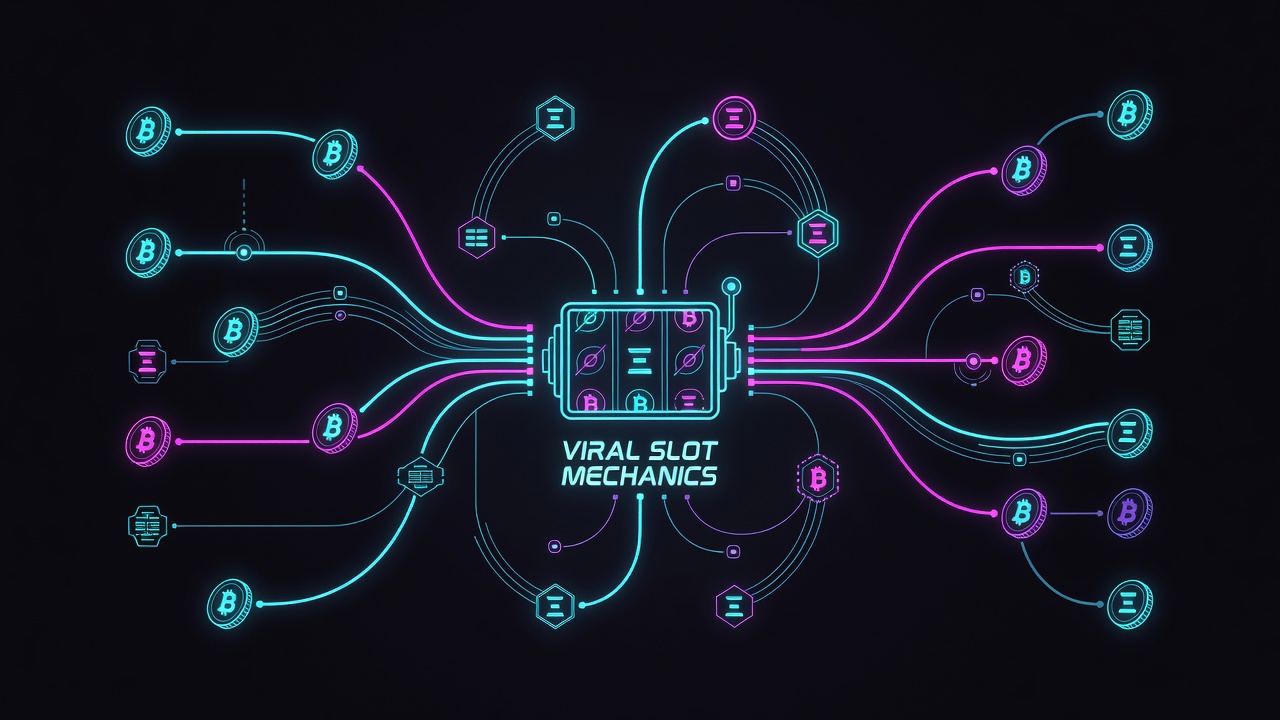
In 2021, the slot game Crazy Time by Evolution Gaming became the most-watched casino game on Twitch, with some streams attracting over 100,000 concurrent viewers. Why Crazy Time and not countless other live games? The answer lies in the intersection of behavioral psychology and social dynamics.
A viral slot must first trigger what Richard Thaler calls loss aversion. Humans feel the pain of a $100 loss roughly twice as intensely as the pleasure of a $100 gain. This asymmetry is not a bug in our decision-making apparatus; it's a feature of how our brains allocate attention. A slot that creates frequent small losses punctuated by occasional larger wins activates this loss aversion in the exact way that keeps players watching. The near-miss effect, documented by Clark Hull in the 1930s and refined by modern gambling research, compounds this effect. A spin that lands just short of a jackpot triggering wheel triggers more dopamine than a spin that misses by a mile.
Crazy Time succeeded because it incorporated both mechanics precisely. The base game is relatively short. Small wins and losses arrive rapidly. Then the bonus wheel offers the chance of 5x, 10x, 25x, or even 50x multipliers on the player's bet. A $10 bet becomes $500 in seconds. The probability of hitting the maximum is perhaps 1 in 2000, but the possibility of it creates what Daniel Kahneman calls probability weighting. Players overestimate the likelihood of large wins and underestimate the likelihood of losses.
The Streamer Multiplier Effect
But mechanics alone do not create virality. Virality requires an audience, and Twitch audiences are bound by parasocial attachment. The streamer is not merely playing the game; they are performing their own emotional investment in the outcome. When a streamer with 50,000 viewers places a $100 bet on Crazy Time, they are not just playing. They are making a promise to their audience that something exciting might happen in the next 30 seconds.
Robert Cialdini's research on social proof explains what happens next. When 50,000 viewers see one person betting heavily and winning, they experience a cascade of motivation to do the same. The streamer's followers are not necessarily calculating the expected value of the game. They are responding to the visual and emotional signals that winning is possible, that it happens, and that they should try it themselves.
The selection bias here is severe. Viewers see the wins. They do not see the majority of streams where the same streamer loses $5,000 in an hour. Streaming culture has selected for entertainment value, not accurate representation of outcomes. A 20-minute clip of a $50 win from a $500 investment spreads across social media. The user watching the clip experiences the win viscerally without the context of the loss.
Dream big wins on Crazy Time routinely exceed $50,000 on a single $100 bet. These happen perhaps once per 10,000 to 50,000 spins, depending on the settings of the stream. The fact that a single clip can generate millions of views means that anyone seeing that clip now underestimates the rarity of the event. The person who watches one viral clip thinks the odds are perhaps 1 in 100. They might be 1 in 100,000.
Theme and Market Saturation
Why did Crazy Time beat out Sweet Bonanza, another Evolution title that launched around the same time? Both games offer similar payout structures. Both incorporate bonus features that trigger win multipliers. The difference is partly aesthetic and partly cultural timing. Crazy Time features a game show host, multiple wheels, and Ferris wheels inside wheels. The visual complexity creates what Mihaly Csikszentmihalyi called flow: a state where the difficulty of the task perfectly matches the viewer's skill level, producing engagement without anxiety.
Sweet Bonanza, by contrast, is essentially a slot. Fruit symbols, a grid of paylines, bonus symbols that trigger free spins. For a streamer playing at high stakes for a large audience, the visual feedback from Crazy Time is richer. There are more moments of suspense, more decision points, more narrative arcs per unit time. This feeds the parasocial attachment more effectively.
When a game goes viral, saturation follows quickly. In 2023 and 2024, hundreds of new live casino games launched, each attempting to replicate Crazy Time's formula. More wheels. More bonuses. More visual spectacle. Most of them failed to achieve significant viewership because the market for novelty is finite. Once a hundred games offer the same mechanics, the signal-to-noise ratio collapses. The behavioral advantage of the original game becomes diluted.
No-KYC Platforms and Organic Adoption
No-KYC operators like Stake and BC.Game have capitalized on this by offering the same games with faster transaction times and no identity verification. These platforms naturally attract streamers because the friction is lower. A player can deposit $1,000 and begin playing within minutes. The onboarding experience at a traditional casino might require documents, verification calls, and a 24-hour waiting period. By the time the verification completes, the moment of impulse and attention has passed.
The behavioral consequence is that no-KYC platforms see higher per-session play duration and higher average bet sizes among streamers. The absence of friction that would typically trigger deliberative thinking (sending documents, waiting, receiving confirmation) allows loss aversion to activate more intensely. Players are already committed. They have already made the decision to participate. The platform simply removes the barriers to execution.
This is why viral games tend to cluster on no-KYC platforms. The combination of mechanically sound games, the parasocial connection of the streamer, and the reduced friction creates a perfect storm of engagement. A $100 bet on Crazy Time at Stake takes 15 seconds from intention to spin. The same bet at a regulated casino with identity verification might take 48 hours.
The game itself is not what goes viral. The experience of watching someone else play the game in an environment where you can immediately copy their behavior, using a platform that has removed barriers to participation, creates virality. This is the formula that works. Any new game that succeeds in replicating this trifecta will capture viewership. The mechanics are necessary but not sufficient. The streamer and the platform are equally essential components.