 NO KYC CASINO
Why Some Countries Have Multiple Regional Gambling Regulators
Gambling regulation is not centralized because gaming is not uniform across borders. Spain has seventeen autonomous communities, each with its own gaming commission. The US has 50 states. This fragmentation creates both protection and opacity.
- logged
- by
- Omar Haddad
- rail
- History
- read
- 6 min
- hash
- 033b6f7
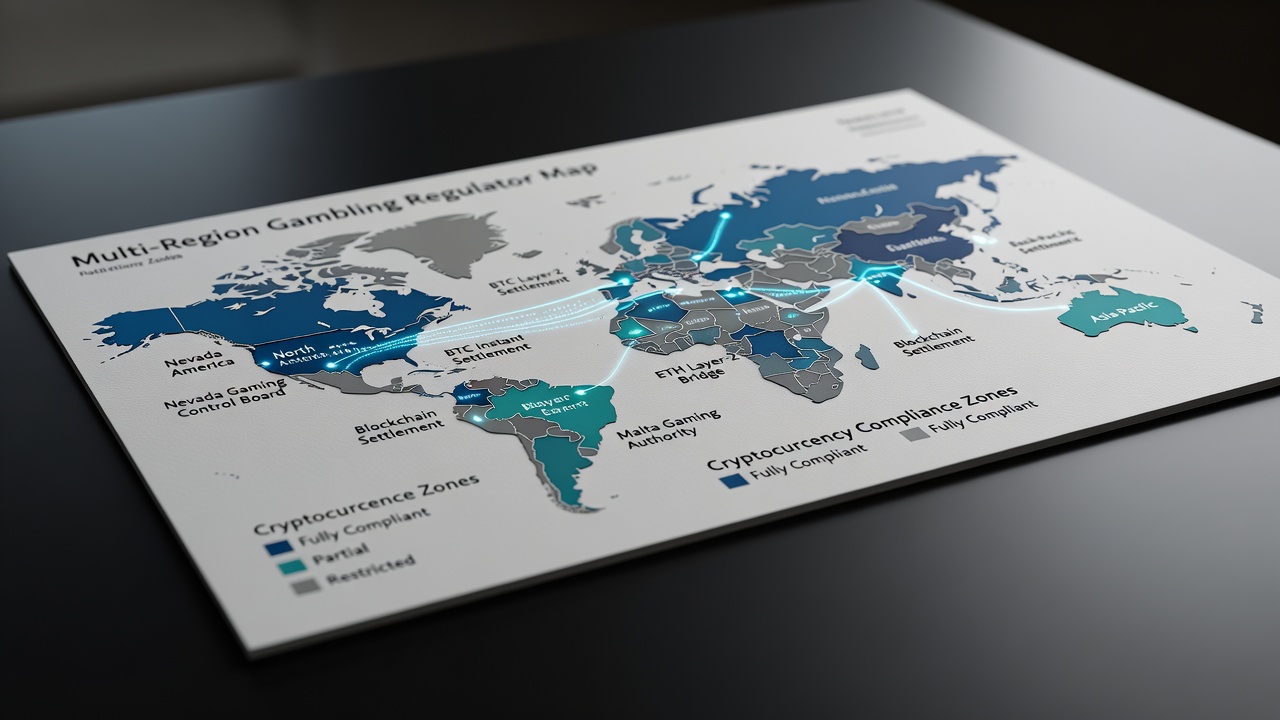
I have spent eighteen years in AML compliance for European gaming regulators. The structure of gambling oversight varies dramatically across jurisdictions, and these variations are not accidental. They reflect geography, history, and political philosophy.
The European Model
Europe demonstrates the clearest pattern of regulatory fragmentation. Spain operates through the Dirección General de Ordenación del Juego (DGOJ), which coordinates national gaming policy. However, autonomous communities like Catalonia, the Basque Country, and Andalusia maintain their own gaming licensing bodies. A casino licensed in Barcelona operates under Catalan law. The same casino, if operated in Madrid, would operate under Spanish national law. Both regulators have different licensing standards, different tax rates, different AML requirements.
This structure exists because Spanish law grants considerable autonomy to regional governments. The principle is subsidiarity: gaming regulation should happen at the level closest to the harm. A regional commission understands local gambling patterns, local demographics, local problem gambling prevalence.
In the United Kingdom, the Gambling Commission regulates England, Scotland, and Wales. Northern Ireland has a separate gambling authority. The distinction reflects both political history and different legal frameworks. The approach is federalist: one regulator for the majority of the country, separate oversight for peripheral regions.
Germany presents a different structure. The federal government sets the Interstate Treaty on Gambling, but each of the 16 states (Länder) maintains its own gaming licensing authority. A sports betting operator licensed in North Rhine-Westphalia operates under different rules than the same operator in Bavaria. The rationale is that gaming revenue funds state budgets. Each state wants control over its gaming market.
The United States Model
The US system is intentionally fragmented. The federal government established the Indian Gaming Regulatory Act (1988), which permits tribal gaming. But the primary regulators are states. Nevada created the Gaming Control Board in 1955, before most states considered gaming legal. New Jersey created the Casino Control Commission in 1977, specifically to regulate Atlantic City casinos. Today, every state that permits gaming has its own regulatory body.
This fragmentation creates what is called regulatory arbitrage. An online sportsbook operator can be licensed in New Jersey and offer services in New York, because New York does not prohibit it. The same operator might be licensed in Nevada and offer services in California, even though California has not explicitly licensed the operator in-state. The regulator in one state has no authority in another.
The structure exists because the US Constitution grants states power over commerce within their borders. The federal government cannot create a unified gaming regulator without amending the Constitution or obtaining explicit delegated authority from states, which they are reluctant to grant.
The Tax and Revenue Logic
Multiple regulators exist partly because gaming revenue is valuable. Gaming licenses cost money. Annual gaming taxes generate substantial state income. When a state has its own regulator, all gaming revenue stays within that state's budget. If gaming were regulated federally, revenue would be distributed to the federal government, and states would only receive a portion.
This creates perverse incentives. States compete to attract gaming operators by offering favorable licensing terms. Nevada offers relatively low gaming taxes compared to New Jersey, so operators prefer Nevada licensing. New Jersey responds by lowering gaming taxes or expediting licensing approval. This race to the bottom is a feature of the decentralized system.
AML and Compliance Implications
From an AML perspective, multiple regulators create coordination challenges. A Curaçao eGaming licensee (which operates under Anjouan licensing authority) serving players in the UK, Spain, and Germany is subject to compliance requirements from at least four different regulatory bodies. The Curaçao authority requires KYC at account opening. Spain requires additional KYC for deposits above EUR 2,500. Germany requires limits on spending and problem gambling checks. The UK requires license-specific responsible gambling statements.
The operator's compliance team must maintain separate procedures for each jurisdiction. This increases operational costs but also increases detection of suspicious activity. A money launderer might satisfy Curaçao's KYC requirements and Germany's limits, but fail Spain's enhanced due diligence checks. Multiple regulators create multiple opportunities for detection.
Conversely, regulatory fragmentation creates gaps. A jurisdiction with weak AML enforcement (Anjouan, for example) becomes attractive to operators and users who want to avoid stringent oversight. The Curaçao Gaming Authority has historically been less rigorous in AML enforcement than the UK Gambling Commission or Spanish DGOJ. This is not conspiracy; it is rational regulatory competition.
The FATF Travel Rule and Its Consequences
The Financial Action Task Force (FATF), in 2019, established the "travel rule" for virtual assets. The rule requires originating VASPs (virtual asset service providers) to transmit KYC information about originators and beneficiaries of transactions above $3,000 equivalent. This applies to crypto casinos.
No-KYC crypto casinos operate in regulatory gray zones partly because the travel rule is difficult to enforce. A player withdrawing from Stake or BC.Game to a DEX (decentralized exchange) triggers the travel rule, technically. But DEXs have no central operator to enforce it. The transmission of KYC is technically impossible. This creates a loophole that no-KYC operators exploit.
Multiple regulators attempting to enforce the travel rule have discovered these gaps. The Curaçao Gaming Authority has not aggressively pursued travel rule compliance. The Anjouan licensing authority (which issues licenses to some crypto casinos) has essentially no enforcement mechanism. The result is that crypto casinos licensed in these jurisdictions can operate with minimal KYC, despite international pressure.
The Rationale for Fragmentation
Regulatory fragmentation persists because centralization has political costs. A national regulator can move quickly, but it is also a single point of failure. If the national regulator is corrupted or captured by industry, the entire market fails. Multiple regulators create redundancy.
Additionally, gaming has cultural significance that varies by region. Some regions view gaming as entertainment. Others view it as a social harm. Regionalized regulation allows communities to set their own tolerance levels rather than imposing a national standard.
The costs of fragmentation include higher compliance burden, increased opportunities for regulatory arbitrage, and inconsistent consumer protection. The benefits include redundancy, cultural alignment, and reduced concentration of regulatory power.
Practical Implications for Operators
A casino operator serving Europe must obtain licenses from multiple national authorities. An online sportsbook in the US must navigate 50 state regimes. The compliance burden is substantial. This is partly intentional: regulators use licensing requirements to screen operators and deter bad actors who cannot afford multiple licensing processes.
No-KYC operators often operate in jurisdictions with minimal regulatory oversight (Curaçao, Anjouan, Vanuatu) to avoid this burden. The trade-off is legitimacy. Players cannot easily verify that a casino licensed in Anjouan is operating under rigorous standards, because Anjouan's standards are unclear.
For players, multiple regulators offer some protection. If a Spanish-licensed casino violates Spanish law, DGOJ can intervene. But if the same casino is licensed only in Curaçao and operating in Spain unlicensed, Spanish authorities have limited recourse. The fragmentation that protects regulatory diversity can also create enforcement gaps.
The system is not optimal. It is what emerges when multiple sovereign authorities each attempt to maximize their own regulatory control.