 NO KYC CASINO
Blackjack Switch: How Swapping Cards Changes Optimal Strategy
In Blackjack Switch, you can swap cards between two hands. That rule change breaks everything you know about basic strategy.
- logged
- by
- Omar Haddad
- rail
- Blackjack
- read
- 3 min
- hash
- 54b77b4
I've worked on blackjack machines for forty years. Blackjack Switch came out in the early 2000s, and it threw every technician for a loop.
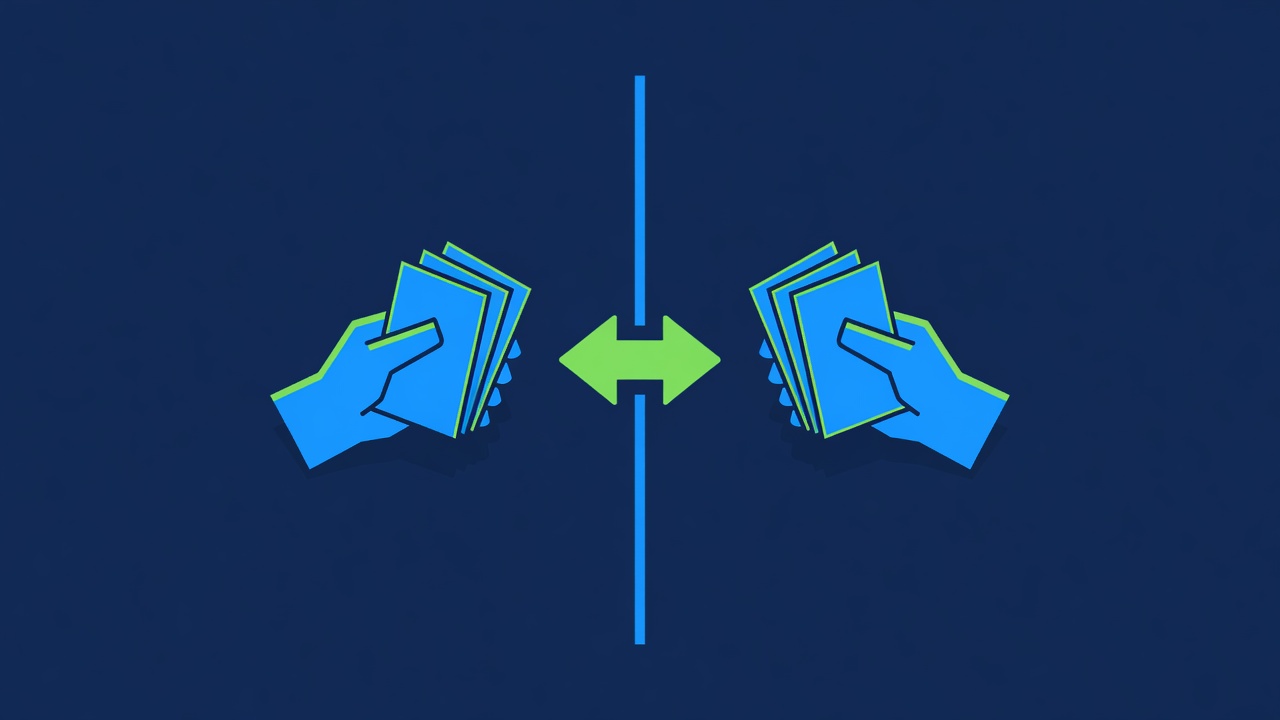
The rule is simple: you play two hands. After the deal, before any action, you can switch the top card of one hand with the top card of the other. You can switch once or twice, or not at all. Then play proceeds like normal blackjack.
Soundly harmless. Mechanically elegant. But mathematically devastating to basic strategy.
Why It Breaks Basic Strategy
In regular blackjack, if you get dealt 16 against a dealer 7, you hit. That's basic strategy. In Blackjack Switch, you might have a 16 in one hand and a 5 in the other. The dealer's showing a 7. You switch the top cards. Now you have a 12 in one hand and a 9 in the other. The 12 is still rough, but the 9 becomes a soft 19 easily. The math now favors that switch.
The switch allows you to convert weak hands into strong ones in ways that normal blackjack doesn't permit. You've got options that the basic-strategy player doesn't have.
Because of this, Blackjack Switch has a higher house edge than regular blackjack, usually 0.58% to 0.67%, depending on the specific rules. The casino compensates for your increased power by hitting on soft 17 and by pushing on dealer 22 (the dealer doesn't bust on 22; it pushes all remaining hands).
The Optimal Play
Blackjack Switch optimal strategy is more complex than basic strategy. There are more decision points. The switch option creates branches in the decision tree that don't exist in regular blackjack.
Generally: if you can switch to make a strong hand (17 or higher) in one hand or both hands, you usually do. If you can't make a strong hand, you switch to make the weak hands as strong as possible. But there are exceptions.
Example: you're dealt 10-6 (16) in the left hand and 10-4 (14) in the right hand against a dealer 7. Switching makes both hands 10-5 (15), which is equally bad. You don't switch. You just play both hands normally.
Another example: you're dealt 10-6 (16) and 5-5 (10) against a dealer 7. You switch, making the left hand 10-5 (15) and the right hand 5-6 (11). The right hand becomes an 11, which you can double on. The left hand is no worse. That switch makes sense.
The Payout Adjustment
The casino doesn't let you have the switch option and keep normal blackjack payouts. The switch is so powerful that the casino needs compensation. They get it through the dealer-22 push rule. When the dealer busts 22, instead of losing, your hand pushes (ties). This costs you about 0.6% in expected value.
Without the 22 push rule, Blackjack Switch would favor the player significantly. With it, the house maintains its edge.
Playing It Clean
If you're going to play Blackjack Switch, understand that it requires study. You can't just apply regular blackjack basic strategy. The switch option changes too much. You need a Blackjack Switch strategy card.
The good news: the game is learnable. It's not more complex than regular blackjack by much. It's just different. If you take the time to learn it, you can play with a very thin house edge.
The bad news: most players don't learn it. They play switches intuitively, which usually means they switch too often or at the wrong times. That's where the casino makes its real money: off the players who think they're clever but are actually playing at a 1.5% disadvantage instead of the mathematical 0.6%.