 NO KYC CASINO
How to Spot a Low-Quality Slot Before You Play
The casino floor tells you which machines are holding up and which are bleeding. You just need to read the signs.
- logged
- by
- Max Turner
- rail
- Guides
- read
- 4 min
- hash
- 6e30f77
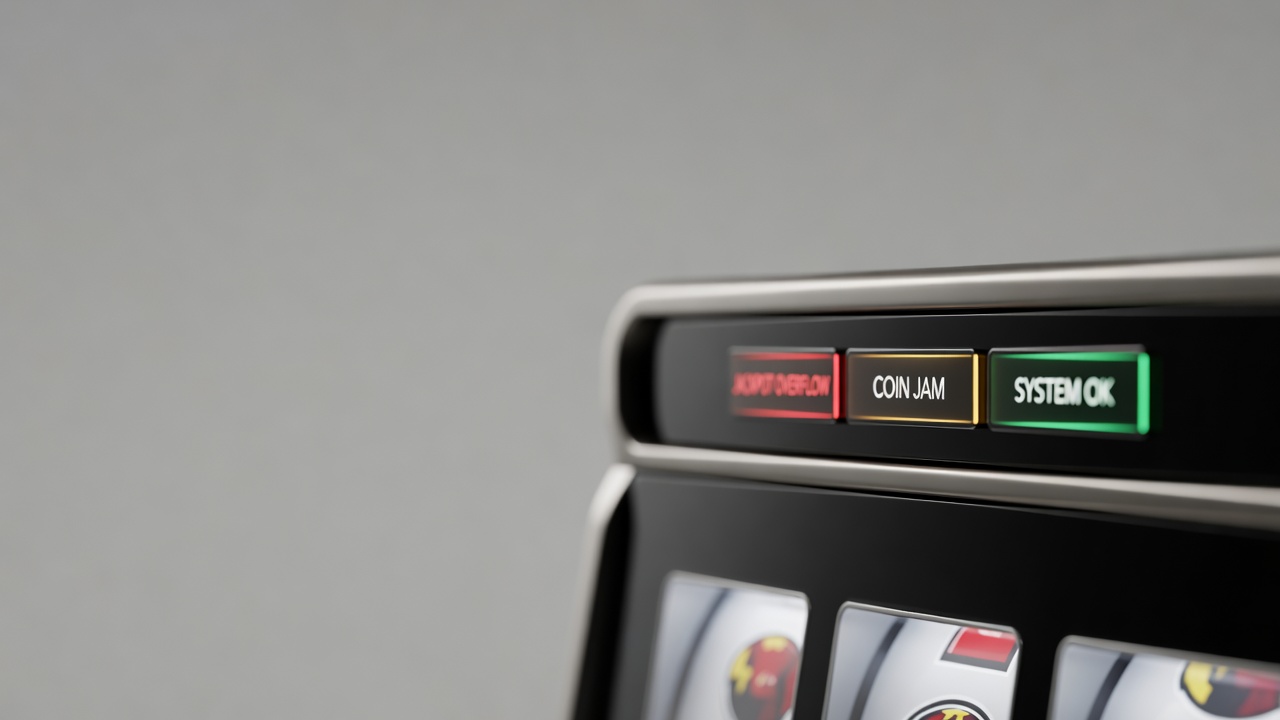
I spent twenty-six years watching the slot floor. You learn to recognize the machines that are working and the ones that aren't.
A low-quality slot has tells. First: the payout schedule. Walk past the game. Can you read the paytable? Is the font large? Is the payout structure clear? A well-designed machine makes it obvious what you win for what. A cheap machine obscures it. You have to click through menus or squint at tiny text. That's by design. The manufacturer doesn't want you comparing it easily to the machine next to it.
Second tell: the art. Look at the graphics. Are they sharp? Is the animation smooth? Does the theme make sense? Cheap machines have muddy graphics and jerky animations. The art team either got three weeks instead of three months, or they outsourced to a firm that delivers quick rather than clean. Both scenarios result in a machine that looks tired.
Third: the gameplay loop. Spin the reels. Do they feel responsive? Does the game respond instantly or does it lag? Do the sounds match the action? Cheap machines have lag. The buttons delay. The sounds don't sync. You press and the machine registers your press a half-second later. That delay is a tell that corners were cut on the software engineering.
The Math Tells the Real Story
Here's what I used to check from behind the glass: the effective RTP. Not the posted RTP. The actual money flowing through the machine. A quality machine posted at 96% RTP should be paying back close to 96% over a normal sample. If a machine's posted at 96% but actually paying 91%, something's wrong. Either the software has a bug, or someone's programmed it to cheat. Both happen. Both are caught, usually.
A low-quality machine often has volatility problems. Legitimate machines have a payoff curve that's somewhat predictable over volume. You'll have losing streaks and winning streaks, but they follow a distribution. Cheap machines sometimes have weird gaps. They go dead for 200 spins, then hit big three times. That's not normal math. That's usually a sign that someone's coded the RNG poorly.
For players, you can't check the actual RTP without access to audit reports. But you can check the posted RTP. Some jurisdictions require it to be displayed. If the machine doesn't clearly state its RTP, that's suspicious.
Reading the Room
Fourth tell: where the casino has placed it. Quality machines live on the main floor, near the entrance, in high-traffic areas. Cheap machines get exiled to the back, near the bathrooms, in dead spots. The casino knows which machines work. They put the winners where people can see them.
Fifth: how often do people play it? Walk past during a busy time. Is it occupied? Do people seem interested? A high-quality machine draws players. A low-quality machine sits empty even when there are people on the floor. Casinos don't remove machines that make money. If a machine's empty, there's usually a reason.
Sixth: the cabinet condition. This one's concrete. Is the machine dusty? Are the buttons sticky? Is the touchscreen responsive? Does the cabinet sit level? Dirty machines were installed and forgotten. That usually means they're not making money. The casino's not investing in maintenance for a loser.
The Real Tell
Honestly? The real tell is simple. If you're trying to figure out if a slot is quality, ask yourself: does this machine feel like someone cared about how it was made? Does it feel solid? Does the game feel fast and responsive? Does it look better than the cabinet next to it?
Low-quality machines feel like they were assembled in a hurry. Everything is slightly wrong. The buttons are slightly sluggish. The sounds are slightly off-tone. The art is slightly dated. It's not one catastrophic failure. It's a thousand small cuts.
Avoid those. Walk down the row. Find a machine that feels engineered. Those are the ones the casino is backing. Those are the ones mathematicians spent time on. Quality machines won't change your odds (the house edge is what it is), but they'll at least feel like you're playing against a machine that someone built right.