 NO KYC CASINO
Why Single Deck Blackjack Isn't Always the Better Choice
Single deck blackjack looks fairer than eight-deck shoes. But the house rules that come with it often make it worse for the punter.
- logged
- by
- Grace Kim
- rail
- Blackjack
- read
- 4 min
- hash
- 2288890
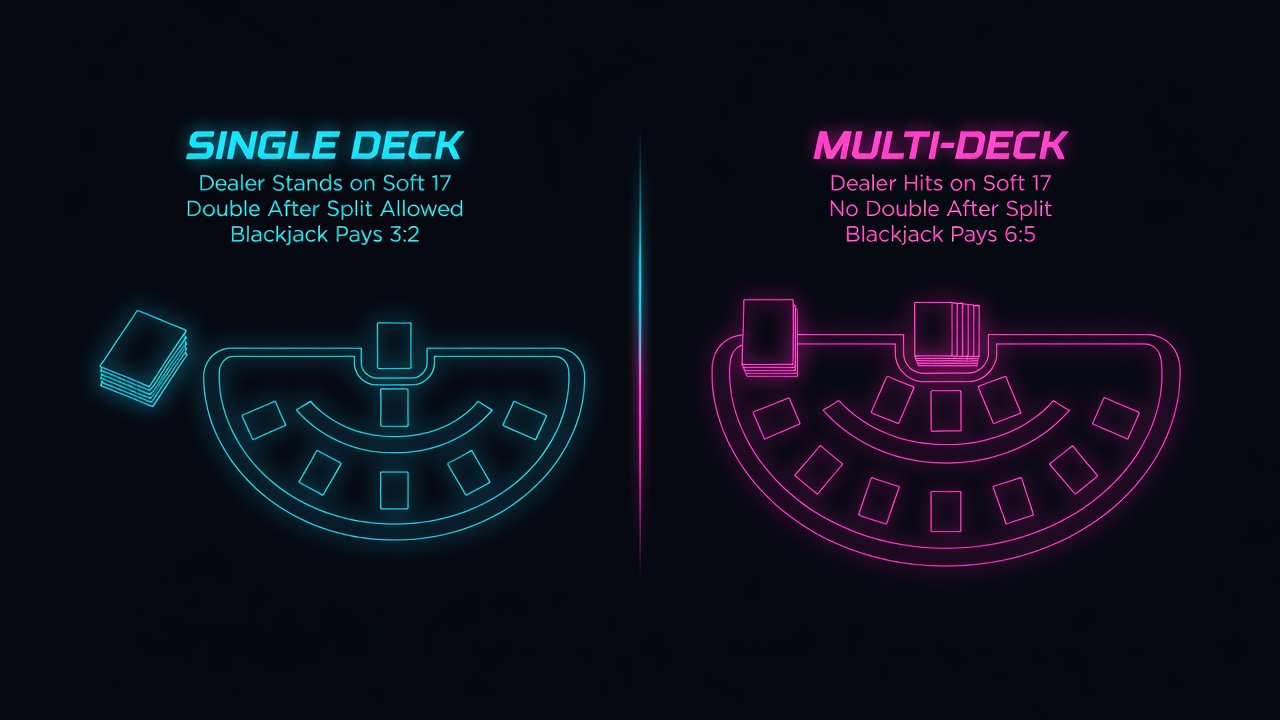
Right, listen. I spent thirty years taking bets on everything from horses to cards, and the one thing you learn is this: nothing a casino offers you is charity. When a book advertises single-deck blackjack, they're not doing you a favor. They're moving the edge in their direction using different mechanics. The math changes when you get rid of the shoe.
Here's the thing about penetration, yeah? In an eight-deck shoe, you might see 80% of the cards before the dealer shuffles. That's deep penetration. A card counter sees more data, more hands, and more opportunities to find an edge when the deck is rich in tens and aces. With single deck, the advantage cuts both ways. Fewer cards means the composition shifts faster and more dramatically. A single ace removed from a single-deck game is a bigger percentage swing than an ace removed from eight decks.
But the casinos are not stupid, are they? When they offer single deck, they don't give you the Atlantic City rules. They tighten the screws. No double down on 11 unless you're beating the dealer's up-card. Blackjack pays 6-to-5 instead of 3-to-2. Some places won't let you split aces more than once. These are called "poor deck penetration," "dealer-favorable rules," and they add up to a house edge that's often worse than the eight-deck game with player-favorable rules.
Let's do the math on this. An eight-deck shoe with standard Atlantic City rules (3-to-2 on blackjack, double on 11 only against dealer's 6 through ace, resplits allowed) has a house edge of about 0.63% for a basic strategy player. A single deck with the same rules? About 0.17%. That looks like you're winning, innit? Here's where they get you. That single deck pays 6-to-5 on blackjack. Now the edge is 1.45%. You just got hammered.
The casinos do this because card counting becomes viable with poor deck composition on single deck. A basic strategy player with a single-deck game might stumble onto a counting advantage without even trying, just by tracking aces and tens. A casino would rather offer eight decks with reader-friendly rules than one deck where any competent bloke can start counting in their sleep.
The Psychological Angle
Here's what gets me about this scam: new players see single deck and think, "Ooh, that's more fair, innit? There's less cards, less tricks." It feels right. And feeling matters. People are terrible at measuring the house edge. They measure feelings. Single deck feels clean. Eight decks feel dodgy, like the casino is packing the house advantage into the shoe somehow. But they're wrong.
I watched punters sit down at single-deck games for fifty years, and I watched them lose faster than they should have. Not because they were playing badly; because the rules were bad. At a good single-deck game (and there are a few, but not many), with 3-to-2 blackjack and proper double-down rules, you've got an edge of 0.17%. But you'll play more hands per hour because the game moves faster. Your hourly expected loss is worse, even though the percentage looks better.
A mug punter can't tell the difference between a 0.63% edge and a 1.45% edge. They can't feel it. They just know that after an hour at the single-deck table, they're down seventy quid, and after an hour at the eight-deck table, they're down fifty. But they remember the single deck as "that fairer game." That's because the casino controls the narrative. They advertise "exclusive single-deck blackjack" and you think you've struck gold.
The real tell is this: if single deck was better for the house, casinos would advertise it relentlessly. Instead, the casinos that offer it usually do so in high-limit rooms where the edge doesn't matter as much because the stakes are enormous. Regular players, standard casinos? Eight decks, every time. Because the edge is easier to protect and they don't have to juice the rules as much.
The best blackjack game is the one with the worst rules, played by someone who knows basic strategy and walks away when they've lost their budget.
If you're hunting for a single-deck game, ask these questions first: Does it pay 3-to-2 on blackjack, or 6-to-5? Can you double on 11 against any dealer up-card, or just weak ones? Can you resplit aces? If any of those are "no," you're in a game worse than a decent eight-deck shoe. Simple as that. The number of decks is not the whole story. It's never the whole story. The rules are the story, and the casino is the author.