 NO KYC CASINO
PayPal at Online Casinos: How Availability Typically Varies
The relationship between PayPal and online gambling is complicated. In 2002, PayPal was processing payments for online casinos freely.
- logged
- by
- Grace Kim
- rail
- Payments
- read
- 5 min
- hash
- 3e0243e
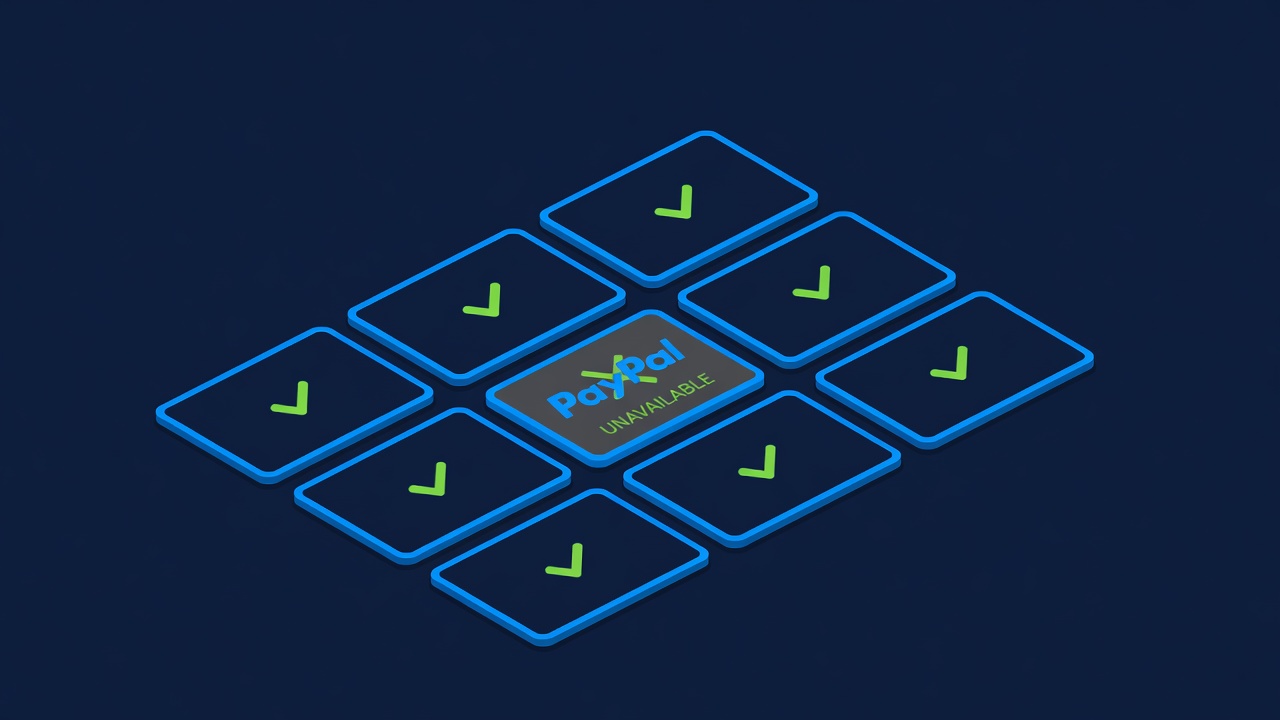
The relationship between PayPal and online gambling is complicated. In 2002, PayPal was processing payments for online casinos freely. By 2003, PayPal was quietly deprioritizing gambling transactions. By 2006, PayPal announced that it would no longer support online gambling in the United States. The announcement came in the form of a terms-of-service update. There was no press release. The company simply stopped processing the transactions.
The story behind this is straightforward: political pressure and regulatory confusion. In 2006, Congress passed the Unlawful Internet Gambling Enforcement Act. PayPal, which was already owned by eBay, made a calculation: the regulatory risk of processing gambling payments was not worth the revenue. They departed the category entirely.
For over a decade, PayPal did not process online gambling payments anywhere. Players who wanted to use PayPal at online casinos had workarounds: using virtual credit cards, having someone else hold the PayPal account, moving money through cryptocurrency wallets and back out to casinos. But the official channels were closed.
The Recent Return
Starting around 2017, the landscape changed. State-regulated gambling in the US expanded. New Jersey legalized online casinos in 2013. Pennsylvania followed in 2019. The regulatory environment became clearer. PayPal, once again owned by itself (separated from eBay in 2015), began exploring re-entry into regulated gambling markets.
PayPal now allows payments to licensed casinos in New Jersey, Michigan, Pennsylvania, and a few other states. But it does not allow payments to Curacao-licensed casinos, unregulated offshore operations, or sites that operate in grey-market jurisdictions. The company is taking a regulatory-first approach: if a casino is not licensed in a known jurisdiction (UK, US state, Malta, MGA), PayPal will not process the transaction.
This creates a two-tier payment ecosystem. A New Jersey player using PokerStars or DraftKings can deposit via PayPal (if those sportsbooks offer it, which they sometimes do). A player in an unregulated market cannot. The consequence is geographic divergence in payment options.
The Global Variance
PayPal's international stance is similarly fragmented. In the UK, PayPal allows deposits to UKGC-licensed casinos. In Germany, PayPal allows deposits to BaFin-regulated casinos. In Australia, PayPal does not process gambling payments at all, following ASIC's guidance that online casinos are not licensed in Australia. In Canada, PayPal allows payments to provincial gaming operators but not to offshore sites.
This patchwork creates a specific market dynamic: trusted payment processors like PayPal (and Visa, MasterCard, Skrill) prioritize licensed operators. Unregulated operators have fewer payment options. They end up using cryptocurrency, local bank transfers, or shady aggregators. This makes unregulated operators less convenient and (arguably) slightly less accessible to casual players who trust PayPal.
From a player perspective, the ability to use PayPal is a positive signal about an operator's legitimacy. If PayPal processes for you, the operator is probably licensed and audited. It is not a guarantee (PayPal's vetting is not flawless), but it is a filter.
The Technical Implementation
When you deposit to a casino via PayPal, you are not giving the casino your PayPal login. You are authorizing PayPal to send money to the casino's merchant account. The casino never sees your PayPal password. This is significantly more secure than entering a credit card number directly (which the casino's servers would store or process).
But there are drawbacks. PayPal charges merchants a fee (typically 2-3% of the transaction). The casino passes this cost to players through tighter margins or higher fees. A player withdrawing 100 dollars via PayPal might incur a 5-10 dollar processing fee. A player withdrawing via crypto might incur zero fees.
Some casinos offer incentives to use methods other than PayPal to offset the processing cost. "Deposit via PayPal, get a 5% bonus. Deposit via crypto, get a 10% bonus." The math is transparent: the casino saves fees on crypto, so it can offer a larger bonus.
The Security Angle
PayPal's dispute resolution is a sword with two edges. If a casino goes rogue and you deposit 1000 dollars and they refuse to pay out, PayPal's buyer protection (for players who fund through a PayPal-linked credit card or bank account) might reimburse you. This is a genuine protection that you do not get with cryptocurrency or direct bank transfers.
But PayPal also sometimes sides with the casino. If the casino claims you violated terms of service (for example, that you used multiple accounts to claim bonuses), PayPal might uphold the casino's refusal to pay out, despite you being able to dispute it. The protections are real but imperfect.
Historically, PayPal has been inconsistent on gambling. They banned certain countries from gambling altogether (Brazil), then unbanned them. They accepted deposits from licensed operators, then suspended them for minor regulatory technicalities, then reinstated them. This volatility makes PayPal unreliable for long-term gambling funding, even at licensed operators.
The Practical Takeaway
If you are gambling at a licensed operator in a jurisdiction that PayPal supports (New Jersey, Michigan, Pennsylvania, UK, Germany, etc.), PayPal is usually available and usually a good choice. If you are gambling offshore or in a non-regulated market, PayPal is not available, and you will need cryptocurrency, bank transfer, or other methods.
The presence of PayPal as a payment option is a mild signal of legitimacy. It is not proof of safety (PayPal is not responsible for the casino's games or fairness), but it is a filter. Casinos that PayPal will not process for often have good reasons for PayPal's refusal. And if you are selecting between two casinos and one accepts PayPal and the other does not, the PayPal-accepting one has probably cleared a higher bar.
But do not assume that the PayPal option makes the casino safe. Read reviews. Check licensing. Understand the cash-out process. PayPal is a payment processor, not a regulator. It is a convenience, not a guarantee.