 NO KYC CASINO
Trustly and Pay-N-Play Casinos: An Overview
Pay-N-Play casinos skip the registration form and let your bank verify you instead. The mechanism is clever engineering. It is also a deliberate application of what behavioral economists have known for fifty years about the role of friction in financial decisions.
- logged
- by
- Omar Haddad
- rail
- Guides
- read
- 6 min
- hash
- 4f3ce7c
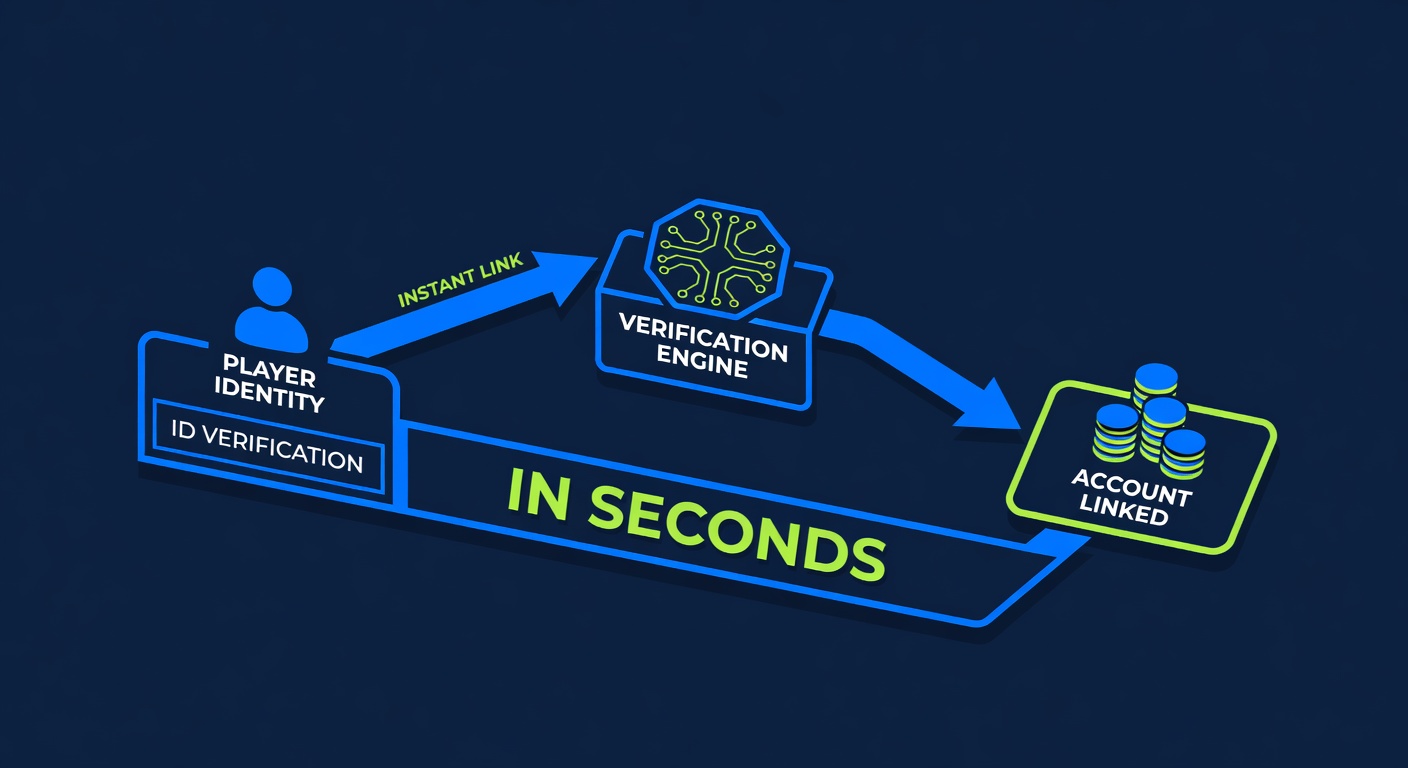
A Pay-N-Play casino lets a player deposit, verify identity, and start playing in one step, using their bank account as the credential.
The technology was pioneered by Trustly, a Swedish fintech that built its original product in 2008 to connect consumer bank accounts directly to merchant sites. The specific casino application, which Trustly branded Pay-N-Play in 2015, does something elegant. It treats the bank itself as the identity verification layer. If your bank says you are who you say you are, and your bank can deposit money for you, the casino skips the usual account creation flow entirely. No email. No password. No KYC upload.
For players in Sweden, Finland, and a handful of other markets where the infrastructure supports it, this feels almost frictionless. That word is the reason I find this product so interesting. Frictionless design is doing real work here, and the work it does is not neutral.
The Explicit Mechanics
From a technical standpoint the flow is straightforward. The player lands on the casino site and clicks deposit. A modal opens that asks them to select their bank and authenticate through the bank's own login flow, typically using BankID in the Nordic region or a similar national e-identification service. The bank confirms the account holder's identity and executes the transfer. The casino receives the funds and a verified customer record in one handshake.
When the player stops playing and withdraws, funds go back to the same verified account. The casino retains the record for regulatory purposes, but no long-lived account in the traditional sense exists from the player's perspective. They did not create one. They cannot log in with a password because there is no password. The next session begins the same way the first one did.
On paper, this is a major improvement over the classic registration experience, which typically required a player to submit identity documents, wait for manual review, and only then begin playing. Pay-N-Play compresses that into roughly sixty seconds.
What the Behavioral Research Actually Says
This is where the interesting part begins. Friction is not neutral. Research by Thaler and Sunstein in their 2008 book on choice architecture, and earlier work by Daniel Kahneman on what he later called System 1 and System 2 thinking, has established something that is almost a truism inside the field and still a surprise outside it: the presence of a small delay, a small effort, or a small moment of deliberation substantially changes the choices people make with their money.
This is why 401(k) plans in the US that default employees into participation have contribution rates roughly twice those of plans that require an opt-in action. The friction of signing up, which takes perhaps three minutes, is enough to reduce participation by half. Not because people do not want to save. They do. The friction simply interposes a moment of second-guessing that most people resolve by postponing the decision indefinitely.
Pay-N-Play removes friction from the gambling deposit in exactly the way that the opt-in form creates friction on the saving decision. The direction is different but the mechanism is the same. When a commitment of money to a volatile, entertaining activity can be executed in under a minute with no registration step, the rate of commitment goes up. It would be strange if it did not.
I am not arguing this is deception. The mechanics are disclosed. Regulators in Sweden, which heavily license this product, have been clear about what it does. The argument is narrower: a design choice that reduces the time between intention and execution is a design choice about how likely execution becomes. That is a real consequence, not a rhetorical one.
Why Casinos Love the Flow
From the operator side, Pay-N-Play has two commercial advantages that are worth stating plainly.
The first is conversion. The casino industry has long known that the gap between a player landing on a site and a player placing a first bet is where most of the prospective business is lost. Any step that can be removed from that gap is worth real money. Pay-N-Play removes multiple steps. Operators have reported conversion rates two to three times higher than traditional registration flows.
The second is session continuity. Because the customer does not hold login credentials, the path to any future session is the same as the first one: authenticate through the bank, deposit, play. There is no friction of forgotten passwords, no churn from lost accounts, no abandonment during a return visit. Repeat visits are almost guaranteed to convert if the player has a balance to deposit.
Both of these benefits are consistent with what Richard Thaler once called the economics of nudging. A nudge is a small change in the choice environment that does not remove any option but makes a particular option easier. Pay-N-Play is a nudge aimed squarely at the deposit decision. It works in the direction the casino wants.
The Regulatory Response
Sweden, where this flow originated, requires operators to apply spending limits, session time limits, and cooling-off periods regardless of the deposit mechanism. Pay-N-Play does not exempt an operator from player protection rules. A player can self-exclude through the national Spelpaus register and be blocked from all licensed operators regardless of how the deposit flow is structured.
Finland, Estonia, and a few other countries have allowed variants of the flow with similar regulatory overlays. Some jurisdictions have pushed back. The UK Gambling Commission, under its 2020 affordability rules, has effectively made a pure Pay-N-Play flow hard to implement because it requires additional verification steps that reintroduce friction.
The regulatory disagreement is not really about the technology. It is about whether the behavioral consequences of removing friction from gambling deposits are acceptable to a given society. That is a values question as much as an engineering one. Different societies have answered it differently, and they will continue to.
What a Thoughtful Player Does With This
The honest advice, informed by what we know about human decision making, is that Pay-N-Play is a genuine convenience and also a genuine risk amplifier. Both things are true at once. The speed that makes it pleasant for a casual Friday evening is the same speed that can turn a bad Tuesday into a larger bad Tuesday than it had any reason to be.
If a player wanted to preserve some of the useful friction that the flow strips out, a reasonable workaround exists: set a weekly deposit limit through the operator's tools before the first session, not after it. That puts a small piece of System 2 thinking in front of the deposit decision. The research suggests the effect, though small per event, is cumulatively substantial. The research is what it is.